The Cocktail Glassware Guide
Why the right glass changes how a drink smells, chills, and tastes — and how to choose one for anything you pour.
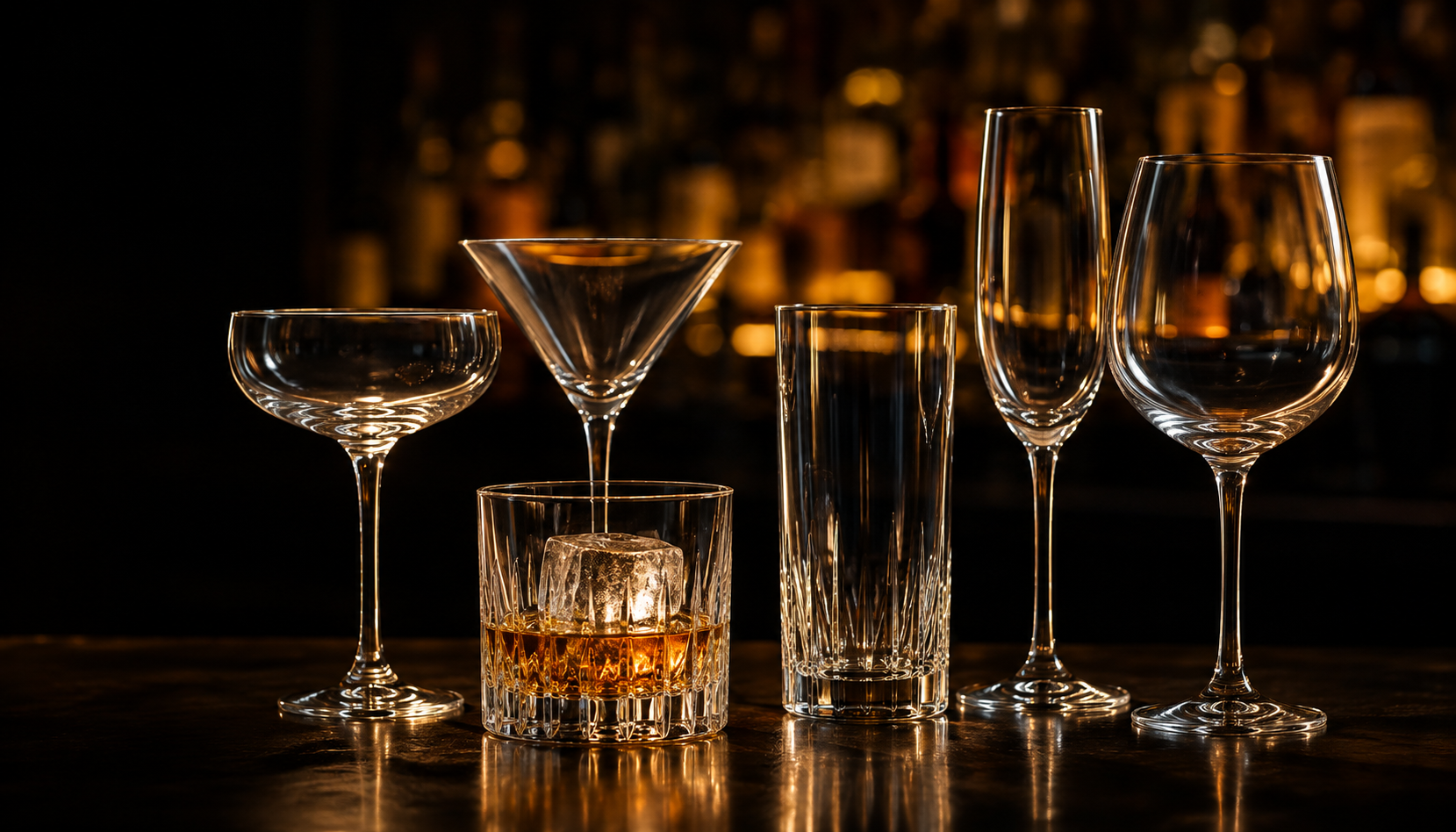
Pour a well-made Daiquiri into a juice tumbler and it still tastes like a Daiquiri. But it drinks like a smaller idea. The chill fades faster, the aromatics scatter before they reach you, and the whole thing looks like an afterthought rather than the crisp, elegant sour it is. Nothing about the recipe changed. But the glass changed the way it arrived.
Glassware is the one part of a cocktail that touches every sense at once, and it is the part home bartenders most often treat as an afterthought. Think of the glass as the last ingredient: it doesn't alter what's in the drink, but it shapes how that drink reaches you.
What a glass actually does
Before the shapes, the reasons. A cocktail glass is doing four practical jobs, and every recommendation later in this guide comes back to them.
It delivers aroma. Most of what we call flavor is smell. A wide, open bowl spreads a drink's surface and lets its volatile aromatics lift toward your nose as you sip; a narrow opening funnels and concentrates them. This is why a fragrant, citrus-forward drink served up rewards a broad glass, and why a glass of neat spirit is poured into something tapered.
It manages temperature. A cold cocktail wants to stay cold. A stem exists so your hand never touches the bowl, and a chilled glass buys you minutes before the drink warms. Drinks served without ice live or die by this, because there's no ice to defend them once they're poured.
It controls ice and dilution. The width of a glass decides what ice fits, and the ice decides how quickly the drink dilutes. A narrow tumbler takes a single large cube that melts slowly and keeps a spirit-forward drink honest. A tall glass built for a big cube of ice or a full pour of soda dilutes on a different, gentler curve.
It presents the drink, and holds its bubbles. Presentation is not vanity; it's the first taste. And for anything sparkling, shape is functional: a tall, narrow glass has less surface area at the top, so carbonation escapes slowly and the drink stays alive longer.
Keep those four in mind and the rest of this guide is really just examples.
The rocks glass
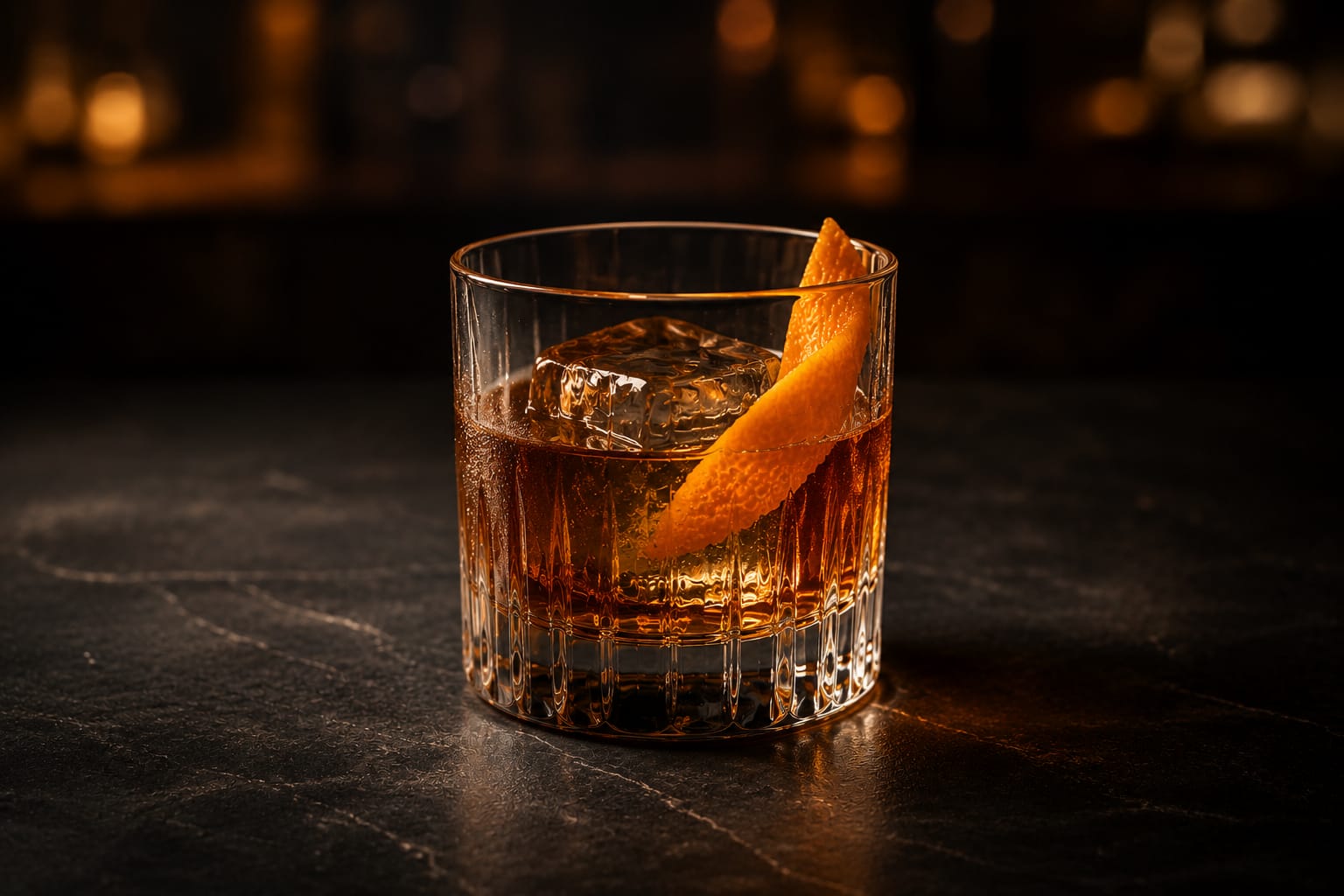
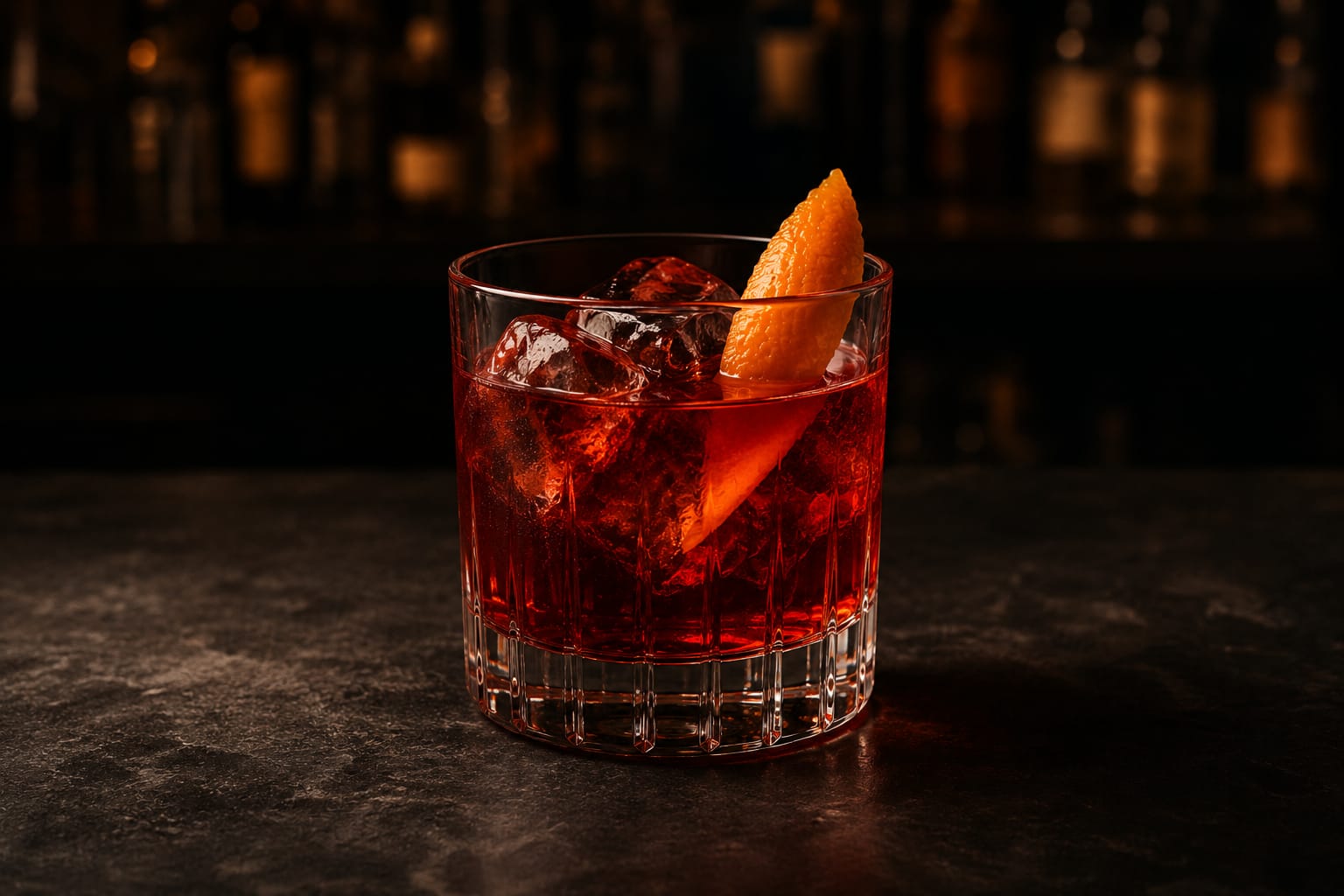
Short, sturdy, wide-mouthed. The rocks glass, also called an old fashioned glass or lowball, is built for spirit-forward drinks served over ice. Its width is the point: it comfortably holds a single large cube, which chills slowly and dilutes slowly, so a strong, stirred drink opens up over several unhurried minutes rather than washing out.
This is the natural home of the Old Fashioned, the drink the glass is named for, and of the Negroni, whose bitter-sweet balance is meant to shift as the ice softens it. A Sazerac takes the same glass without ice at all, its absinthe rinse concentrated by the tumbler's straight walls. If you buy one glass first, buy this one.
The coupe
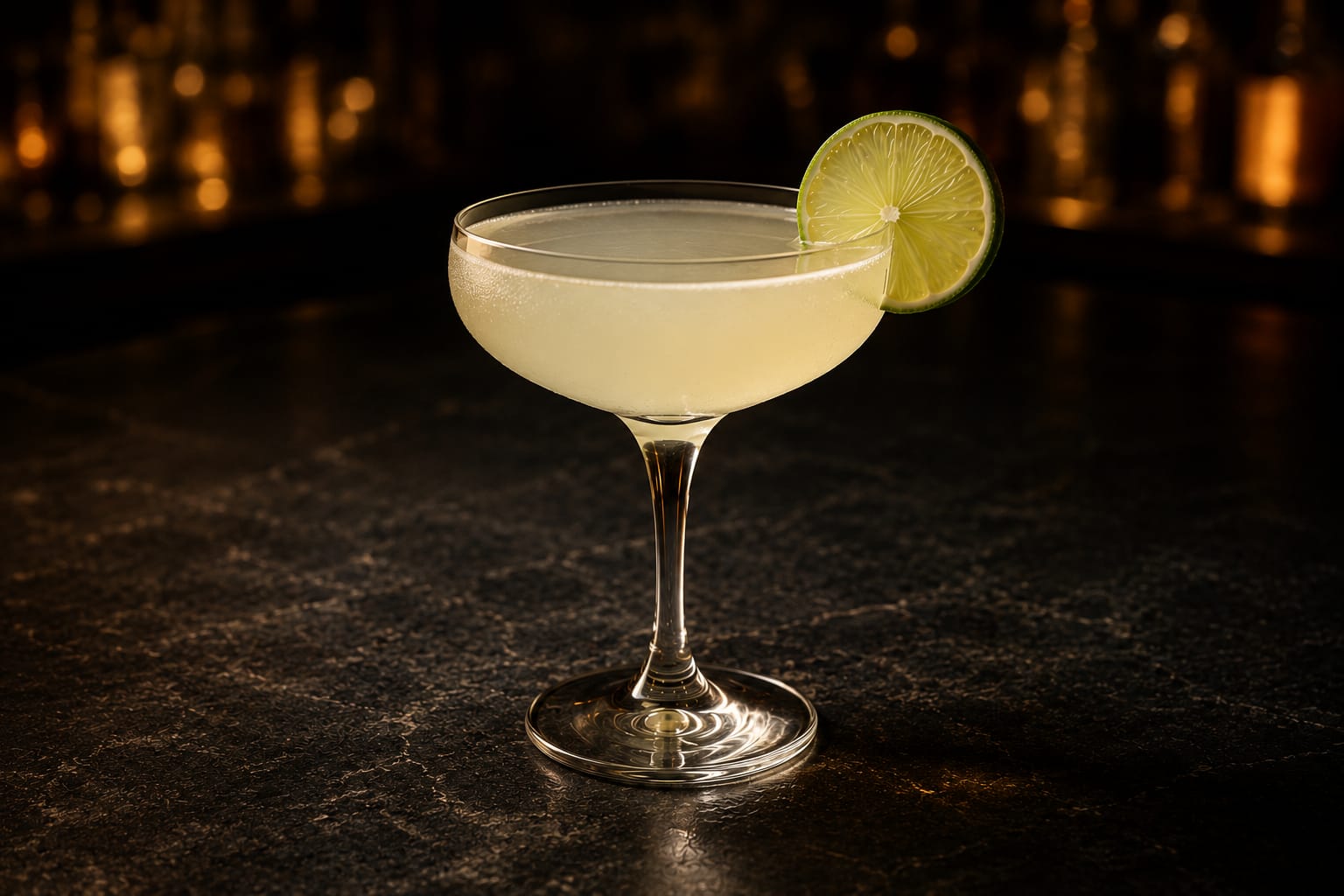
The coupe is a shallow, broad-bowled stemmed glass, and it is the most useful cocktail glass most people don't own. It's made for drinks served "up" — shaken or stirred with ice, then strained, leaving the ice behind. The stem keeps your hand off the bowl so the drink stays cold, and the wide surface opens up aromatics beautifully.
Its range is enormous. A Daiquiri or a Clover Club looks and drinks its best here, the shallow bowl showing off a fine foam or a clean, pale sour. So does a Sidecar, a Manhattan, or almost any classic that ends without ice. The coupe's one honest flaw is capacity: it fills quickly and, being shallow, isn't the glass for a long night of slow sipping. That's a feature more than a bug. Drinks served up are meant to be drunk while they're cold.
The martini glass
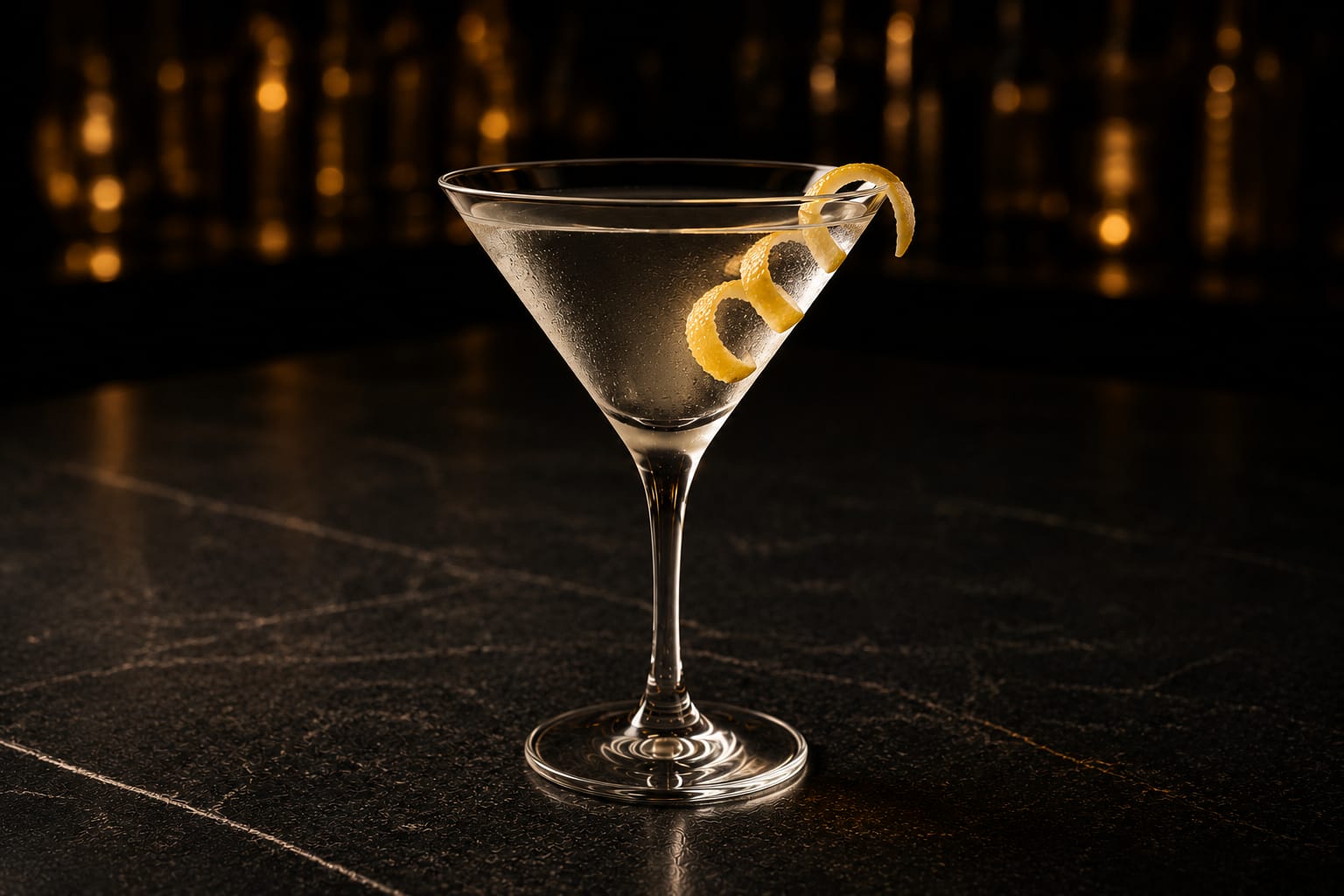
The V-shaped martini glass is the most recognizable object in any bar, and its reputation outruns its usefulness. What it does well, it does uniquely: the broad, sharply flared bowl throws aromatics straight up at you, which flatters a fragrant, spirit-driven drink. A Martini or a Vesper in a proper V-glass is a genuinely different experience from the same drink in a tumbler.
The trade-off is stability. Those steep walls leave little room for error, so the glass is easy to spill and easy to warm when your hand reaches the bowl. This is exactly why so many bartenders reach for the coupe instead: same up-serve, gentler geometry. There's also a quieter middle ground worth knowing: the Nick & Nora, a small stemmed glass with a rounded bowl and a slight inward curve, prized for stirred, spirit-forward drinks because it holds its contents without sloshing and still lifts aroma. BarSnap serves those classics in a coupe, which does the same job, but if you fall for the up-serve the Nick and Nora is a lovely thing to own.
Highball and Collins
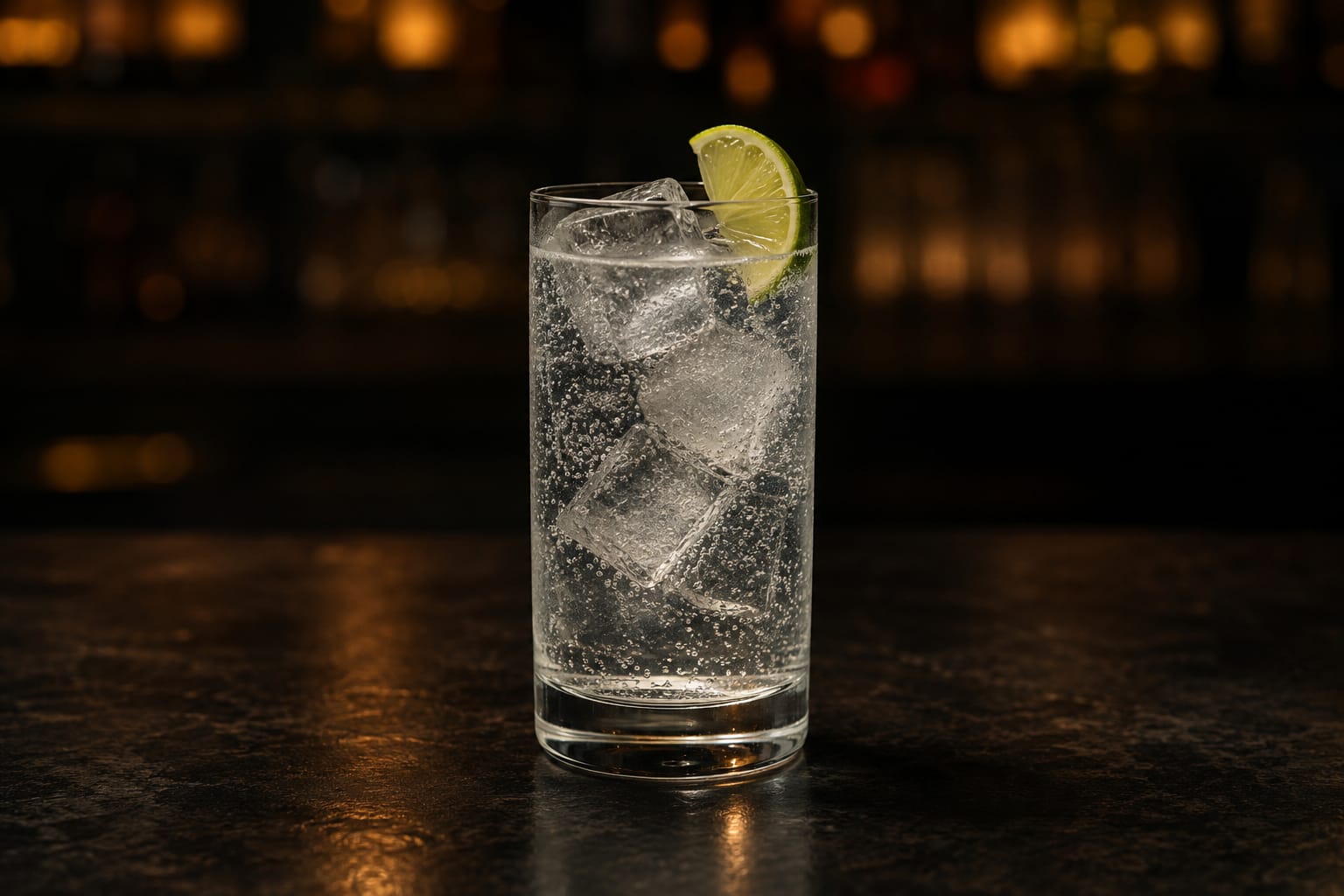
When a drink is long, cold, and topped with something fizzy, it belongs in a tall glass. The highball is the workhorse: a tall, straight-sided glass built to hold plenty of ice and a generous pour of soda, tonic, or ginger beer. The height matters. It keeps the ice stacked and the carbonation deep in the glass, so a Gin and Tonic stays crisp to the last inch instead of going flat and warm halfway down.
You'll also see the Collins glass, which is simply taller and a touch narrower. The distinction is real but small, and it exists mostly to give a drink like the Tom Collins a little more room. In practice many bars pour both styles into a single tall glass, and BarSnap uses the highball for Collins-style drinks throughout the catalog. A Mojito, packed with mint and crushed ice, is right at home in the same glass. One tall glass covers all of it.
Flute and sparkling
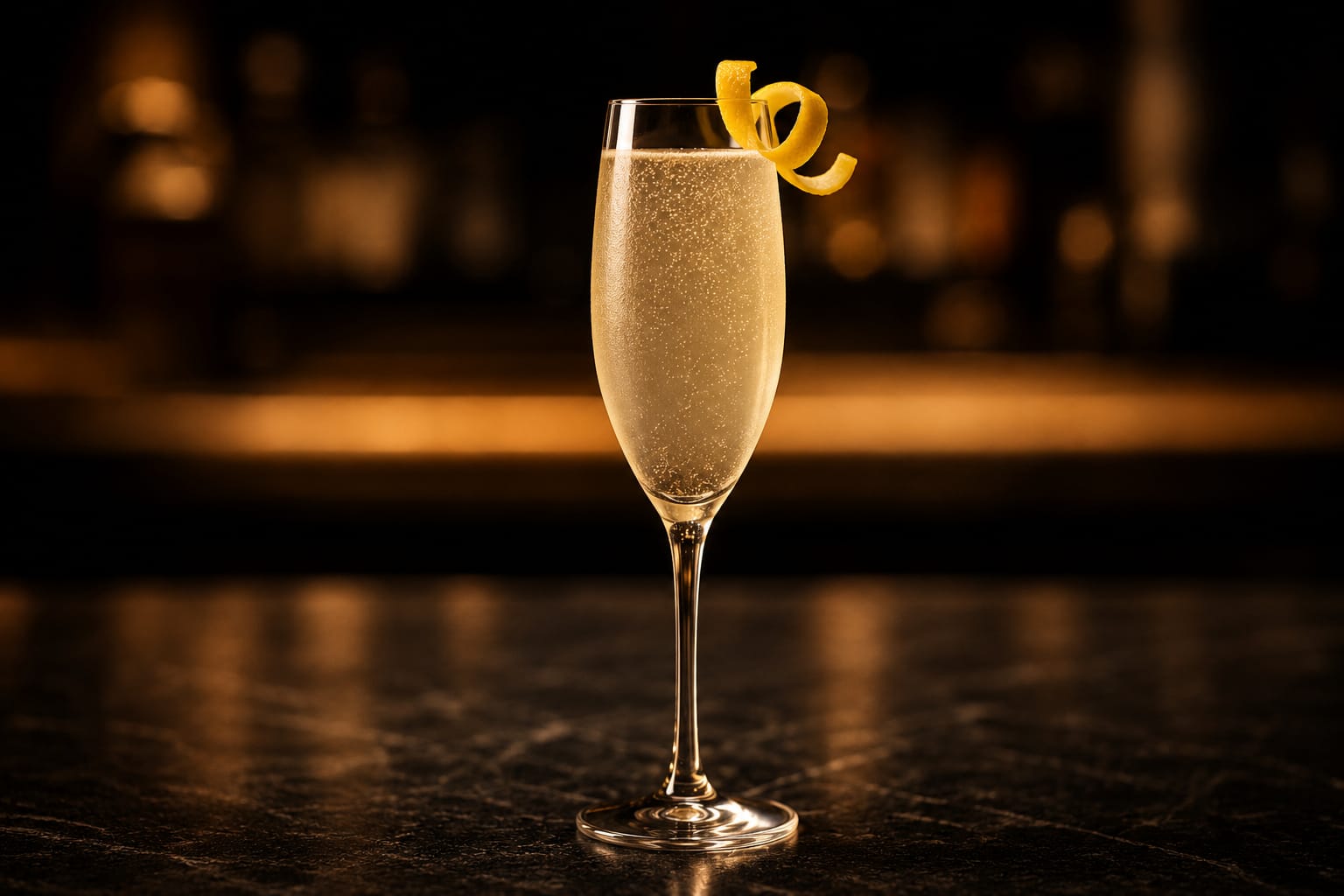
Bubbles are fragile, and the flute is engineered to protect them. Its tall, narrow bowl minimizes the surface where carbonation escapes, so a sparkling drink keeps its bead far longer than it would in anything wide. It also shows a stream of rising bubbles beautifully, which is its own quiet pleasure.
Use it for cocktails built on Champagne or prosecco, where the sparkle is the point. A French 75 lengthened with Champagne wants that narrow column to stay lively from the first sip to the last. The flute's limitation is aroma: the same narrow opening that guards the bubbles gives fragrance little room to breathe, which is why a growing number of bartenders now favor a tulip or even a white-wine glass for more aromatic sparkling drinks. For a classic flute cocktail, though, the trade is worth it.
Wine glass and the spritz
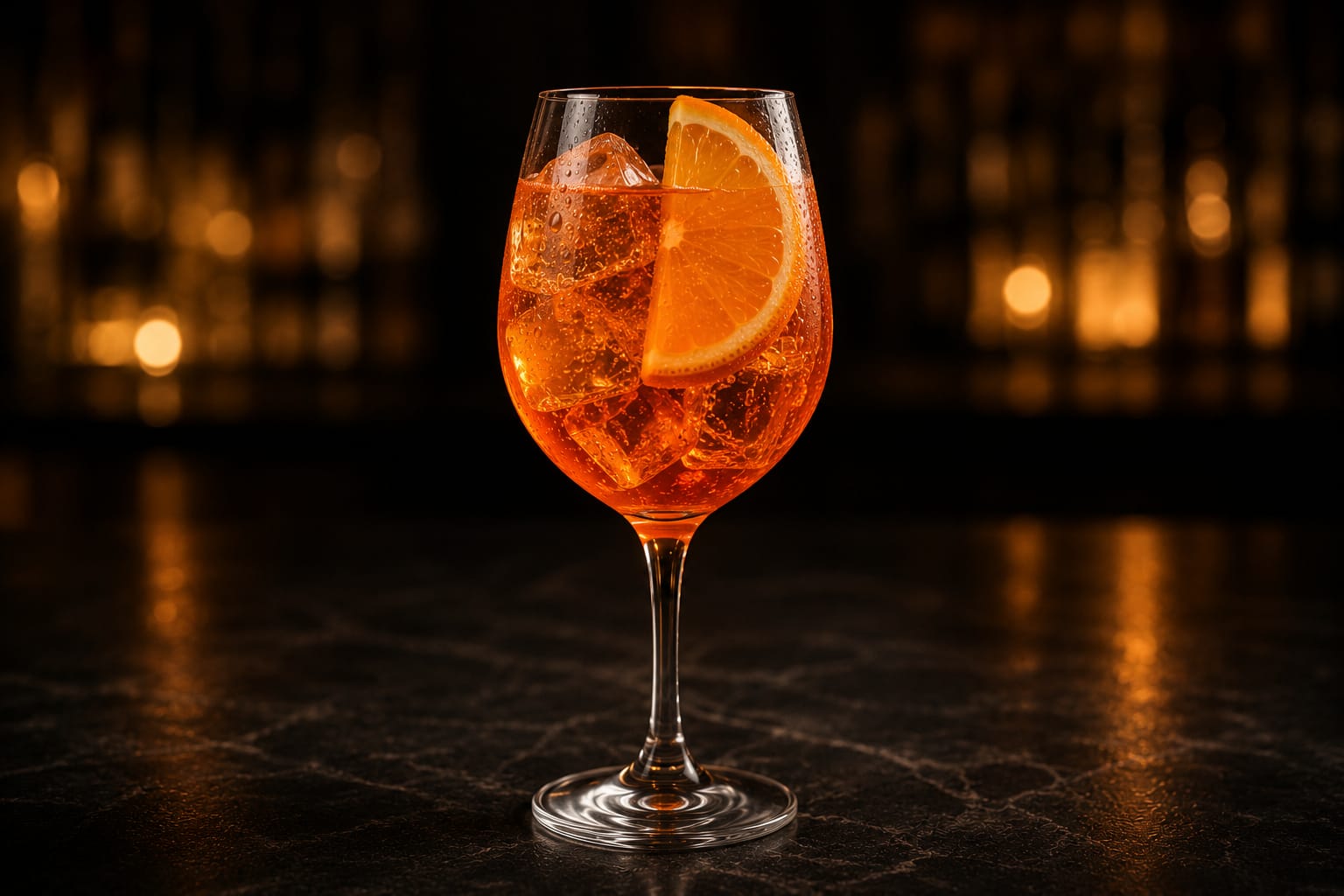
The wine glass has quietly become one of the most practical cocktail vessels in the modern bar, largely on the strength of the spritz. A big-bowled stemmed glass holds a lot of ice, which is exactly what a low-alcohol, all-day drink needs to stay cold and diluted at a leisurely pace, and the wide bowl gives its aromatics somewhere to gather.
An Aperol Spritz is the drink that made this normal: bright, bitter, barely boozy, and built to be nursed on a warm afternoon. The generous bowl keeps it refreshing far longer than a small glass would. If you already own wine glasses, you own most of what the spritz category asks for.
Beyond the basics: tropical, mugs, and hot drinks
A few drinks come with their own glassware, and it's usually functional rather than decorative.
Big tropical drinks — the kind loaded with crushed ice, fruit, and more than one rum — go in a hurricane glass, a tall curved bowl with the capacity to hold all of it. A Piña Colada needs that volume; a juice glass simply can't contain the drink. Not everything with a tiki reputation lives here, though. The Mai Tai, for all its Polynesian associations, is a rocks-glass drink, built over crushed ice in a short tumbler rather than a towering vessel.
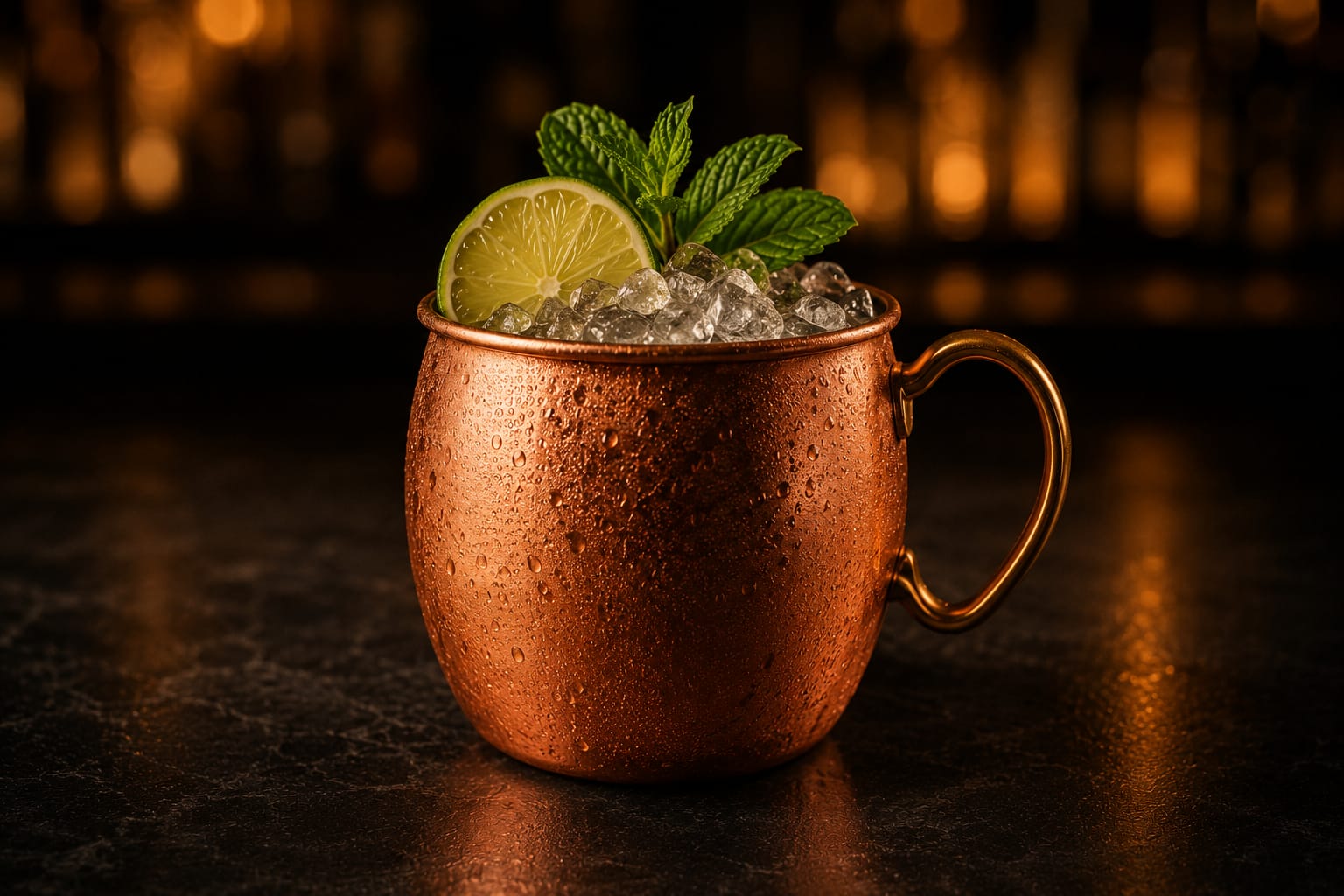
The copper mug earns its place with the mule. Copper conducts heat quickly, so a chilled mug feels cold almost immediately in your hand, and a Moscow Mule served in one reads instantly as what it is. And hot drinks want a heat-safe, handled glass: an Irish Coffee or a hot toddy in a footed mug lets you hold something steaming without burning your hand, while the clear glass shows off a floated cap of cream. A Mint Julep's frost-covered metal cup follows the same logic, keeping crushed ice thoroughly cold.
When the recipe doesn't say
Plenty of recipes name a glass. Plenty don't. Once you understand what a glass is for, you can reason your way to a good choice every time, using a simple rule of thumb.
If a drink is served up, with no ice in the final glass, reach for a coupe. If it's spirit-forward and served over ice, use a rocks glass. If it's long, fizzy, and full of ice, use a highball. If it's sparkling, use a flute or a tulip. That single decision tree covers the large majority of cocktails you'll ever make.
Substitutions are fine, as long as you respect the same logic. No coupe? A small wine glass serves an up drink well, since it's stemmed and open. No highball? A pint glass keeps a long drink cold and fizzy. The choices that genuinely disappoint are the ones that ignore the drink's needs: a stirred, iceless cocktail in a warm tumbler with no stem, or a bubbly drink in a wide, shallow bowl that lets the sparkle die in a minute.
Building your glassware, in order
You don't need eleven kinds of glass. You need a few, bought in the right order.
Start with three: rocks, coupe, and highball. Between them they cover spirit-forward drinks on ice, anything served up, and every long fizzy cooler — which is most of what a home bar pours. Buy them in pairs or fours; glassware is more useful in company.
When you're ready to expand, add a flute or tulip for sparkling drinks and a set of wine glasses, which double for spritzes and low-alcohol drinks. A V-shaped martini glass is worth owning if you love the ceremony of it, though the coupe quietly does the same work with fewer spills. Everything past that — copper mugs, hurricane glasses, footed mugs for hot drinks — is a specialty purchase, worth making when a drink you love calls for it and not before.
Two habits get more out of whatever you own. Chill glasses meant for cold drinks, either in the freezer for a few minutes or filled with ice water while you build the cocktail, then emptied just before you pour; a cold glass is the cheapest upgrade in bartending. And warm the glass for anything hot, rinsing it with hot water first so a heat-safe mug doesn't crack and your coffee drink doesn't lose its steam on contact.
Get the glass right and every drink arrives colder, more fragrant, better looking, and more like itself. It's the last ingredient, and it's the easiest one to get right.