The Cocktail Ice Guide
Ice does two jobs at once — it chills and it dilutes — and the shape and amount you choose control the balance. A practical way to pick the right ice for anything you pour.
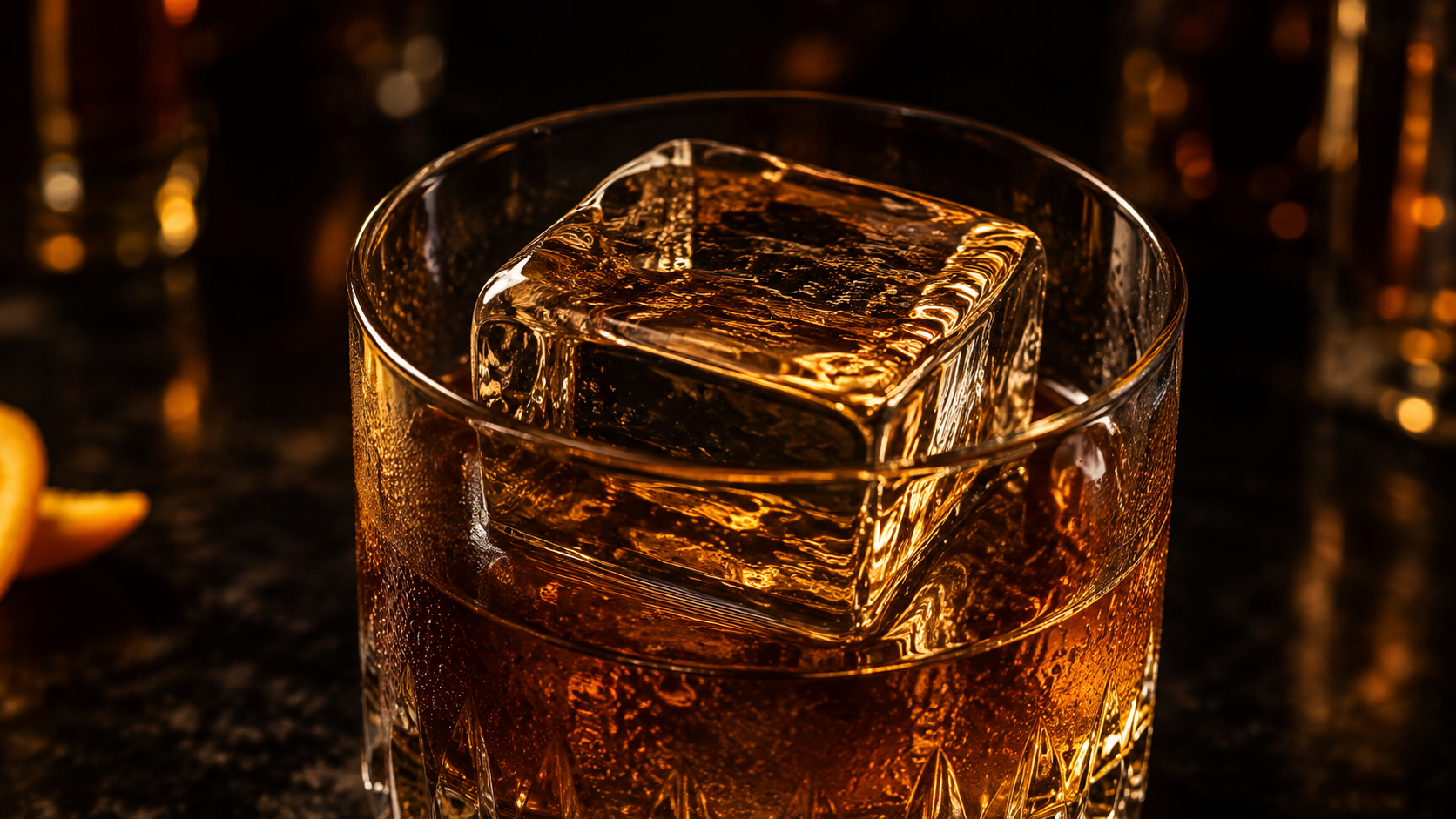
Pour two Old Fashioneds exactly the same way, into the same glass, and change one thing. Into the first, tip a handful of small cubes straight from the freezer tray. Into the second, lower a single large cube, the kind that fills most of the glass on its own. Then walk away for ten minutes.
Come back and taste them side by side. The first is cold, certainly, but thin and slack, the whiskey blurred into something closer to spiked water. The second is still sharp, still recognizably itself, with the whiskey intact beneath the chill. Same whiskey, same measure, same glass. The only variable was the ice, and the ice changed the drink completely.
That gap is the whole subject of this piece, and it's the part of a cocktail home bartenders think about least. Ice reads as a given — the cold thing you add so the drink isn't warm — when it is in fact one of the most consequential ingredients in the glass. It does two jobs at once: it chills the drink, and it waters it down. Neither job is optional, and neither is a flaw. The craft is in controlling the relationship between the two, and the tools for that control are almost embarrassingly simple — the shape of the ice, and how much of it you use.
What ice is actually doing
Take the dilution first, because it's the half people apologize for. A finished cocktail is meant to carry water. The shaking or stirring that makes a drink cold is the same motion that waters it down, and that isn't a tax you pay for the chill — it's part of the recipe. Spirits poured straight from the bottle over nothing are not a purer version of a drink; they're a harsher one. A measure of water rounds the sharp edges off the alcohol, opens aromatics that were shut at full strength, and turns a set of assertive ingredients into something you'd want to sip. Dilution is seasoning. The trick is getting the right amount and then stopping.
Chilling is the half nobody argues with, but it comes bound to the first: as ice chills a drink, some of it melts, and that meltwater is dilution. You can't have one without the other — you can only decide the ratio between them. How quickly ice chills and dilutes a drink depends heavily on how much of its surface meets the liquid, along with the amount and temperature of the ice, how much the drink is agitated, and how long the two stay in contact. A cloud of crushed ice has enormous surface area and surrenders both fast. A single dense cube has very little and surrenders both slowly. Everything that follows is a consequence of that one idea.
So every drink really asks the same three questions: how cold should it be, how much water should it carry, and how quickly should it get there? Answer those, and the ice chooses itself.
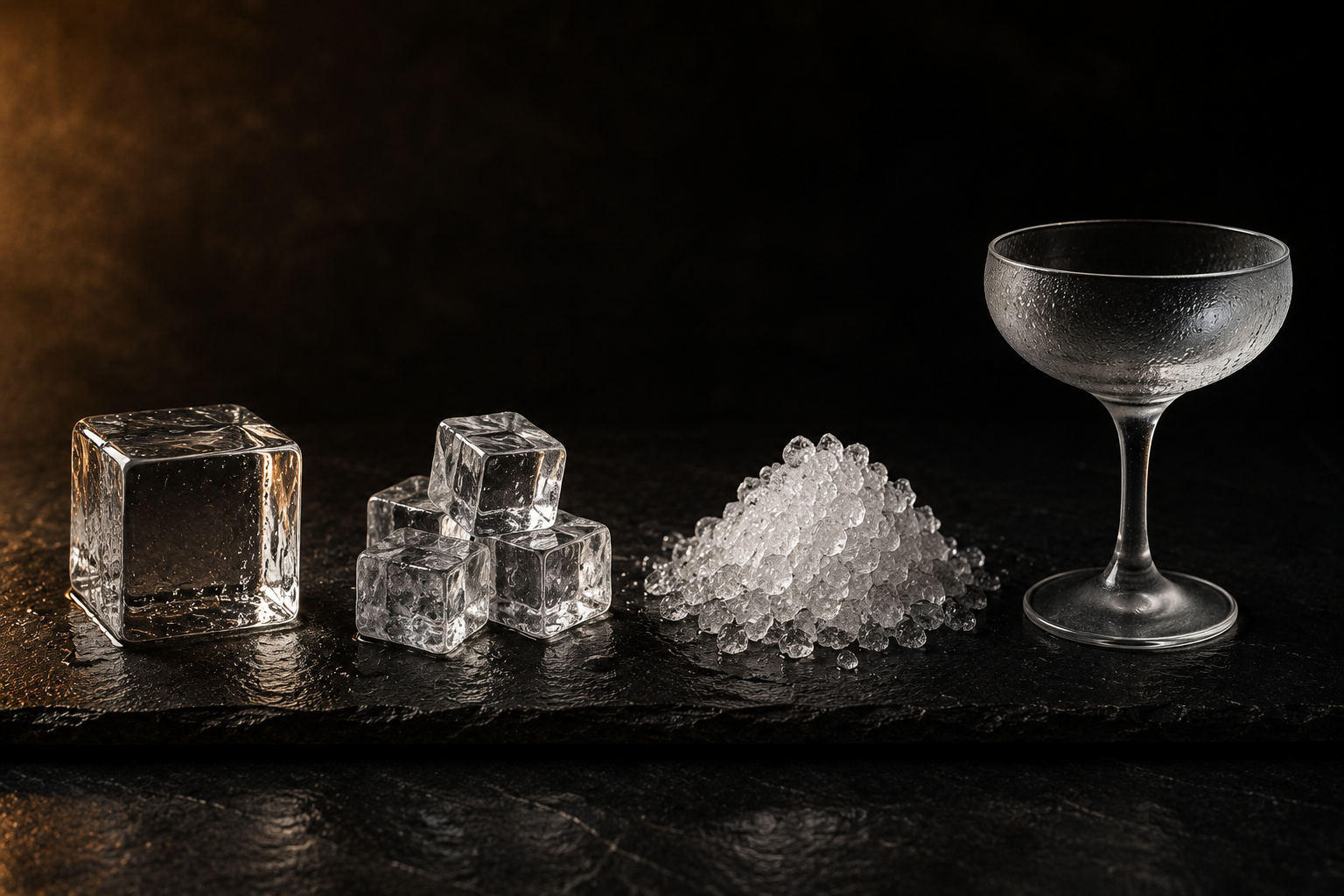
The big cube
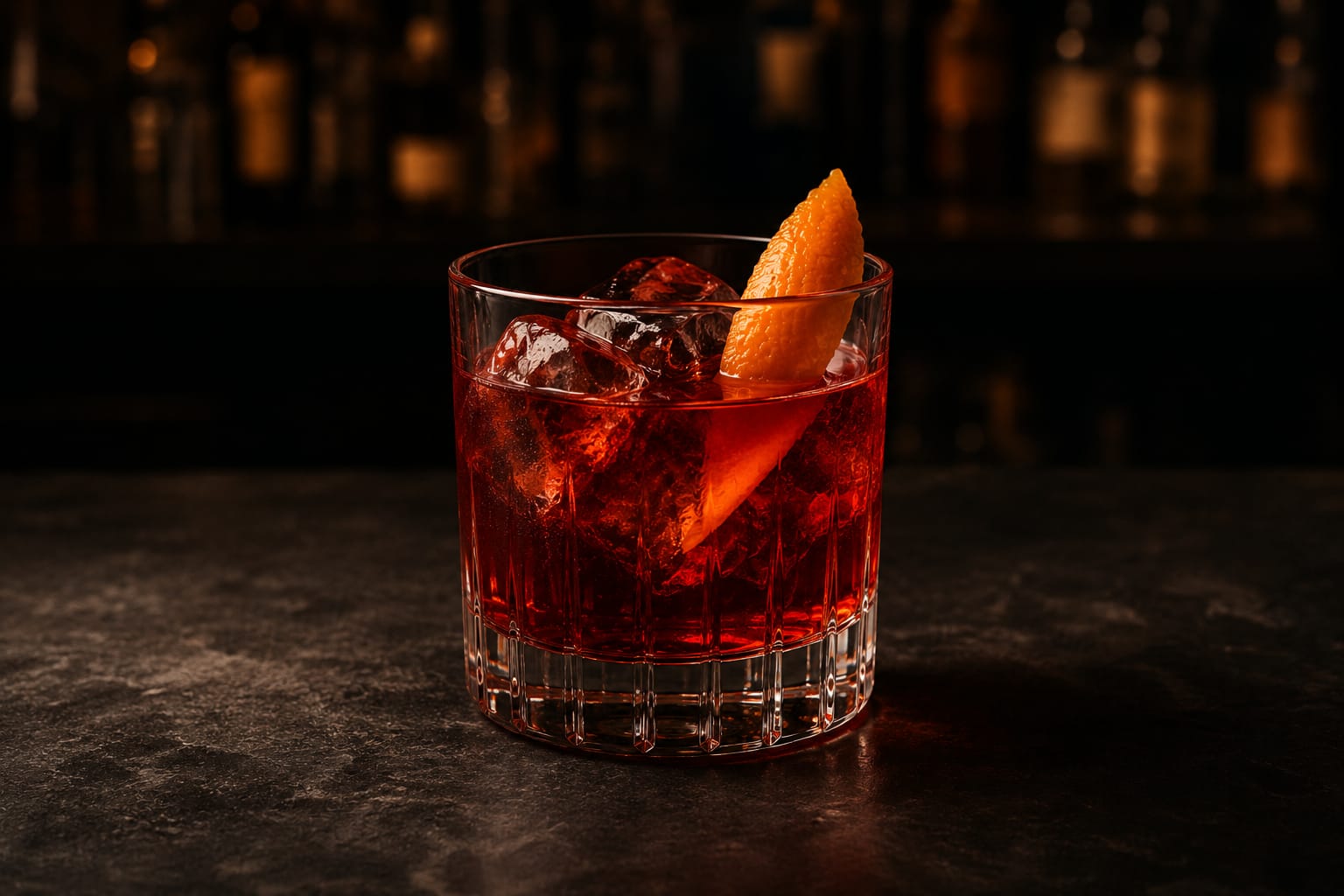
Start with the least ice doing the most thinking. A single large cube has the smallest surface area you can give a drink and still call it iced. It brings the liquid down to temperature and then, crucially, holds it there — keeping the drink cold without steadily turning it to water. That patience is the entire point, and it's why the big cube belongs to the spirit-forward, stirred drinks meant to be nursed rather than knocked back.
An Old Fashioned is the clearest case. It is whiskey, sugar, bitters, and a peel — nothing to hide behind, so any stray water announces itself immediately. A single cube keeps the drink honest for as long as it takes to finish. A Negroni and its wider family ask for the same restraint: equal parts of three assertive things, stirred and set over one big rock so the bitterness and the botanicals stay in sharp focus instead of dissolving into the background. A Boulevardier, which swaps bourbon into the Negroni's place, wants exactly the same handling. What they share is a starting condition: they're built around concentrated flavors, and the ice's job is to bring them into balance without quietly rewriting them.
Cubes
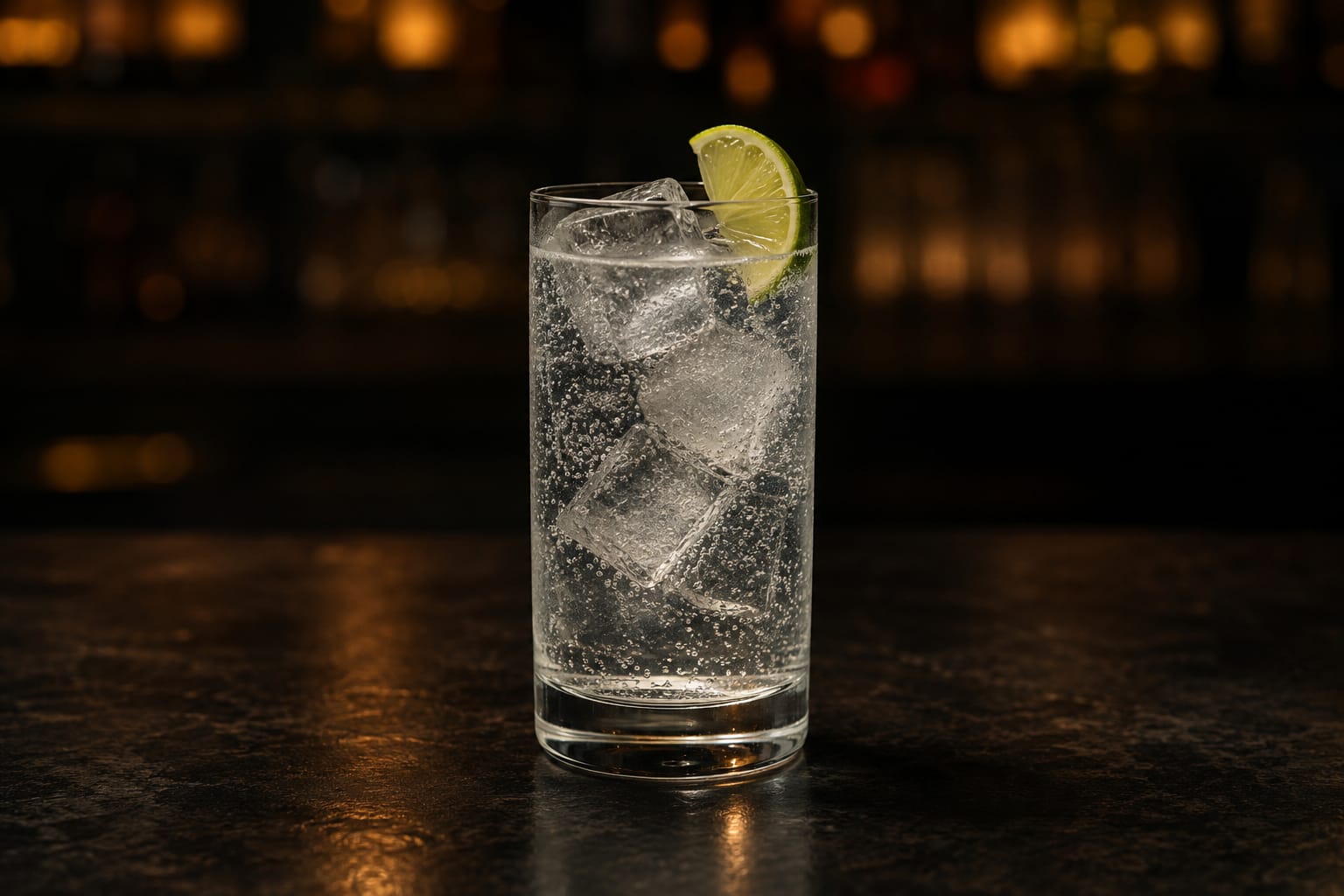
Standard cubes are the workhorse of the bar, and their home is the long drink — the highballs and mules and spritzes built in the glass and lengthened with something fizzy. Here a little more dilution isn't just tolerated but welcome: the drink is long and refreshing by design, and the ice's slow melt is part of what keeps it drinkable to the last sip.
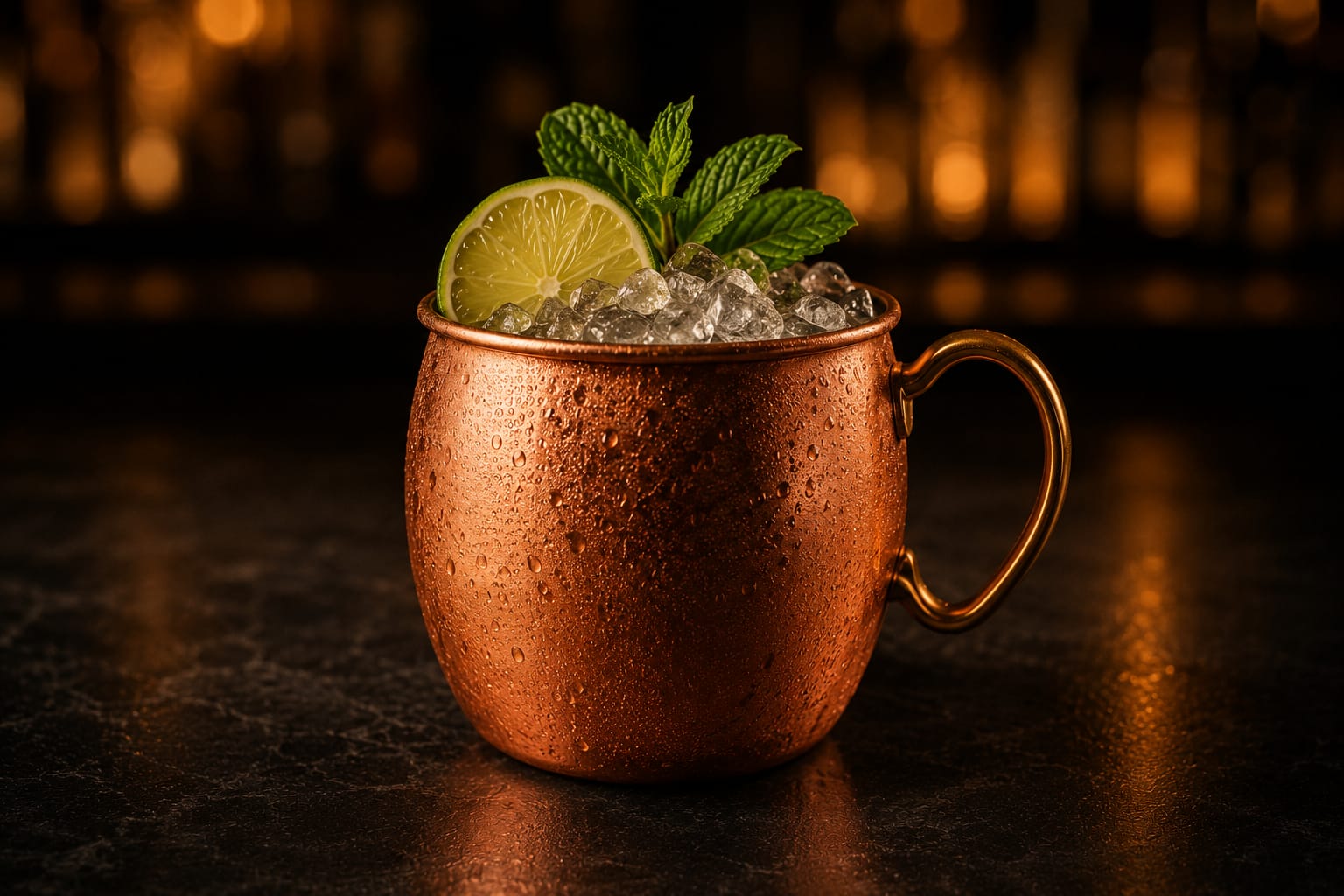
A Gin and Tonic or a Moscow Mule shows the logic plainly: the ice chills the spirit fast, the mixer keeps the whole thing cold and stretches it out, and as the cubes give up a little water the tonic or the ginger beer more or less replaces what's lost. A Paloma runs on the same principle — a spirit, a sharp mixer, a full glass of ice, and time.
This is where the most useful and least intuitive piece of ice technique lives: fill the glass. A glass crammed to the top with ice makes a colder, less watery drink than the same glass with a few cubes rattling around in it — and the reason is worth understanding rather than memorizing. Chilling a drink takes a fixed amount of cold, and the ice can only supply that cold by melting. A few cubes have to melt most of themselves away to get there, so a large share of what ends up in your mouth is their meltwater. A full glass supplies the very same amount of cold by melting a small fraction of a much larger mass; packed together and brought quickly to temperature, it then coasts, holding the drink cold while surrendering very little more. Less ice doesn't mean less water in your glass. It means more.
Crushed and pebble ice
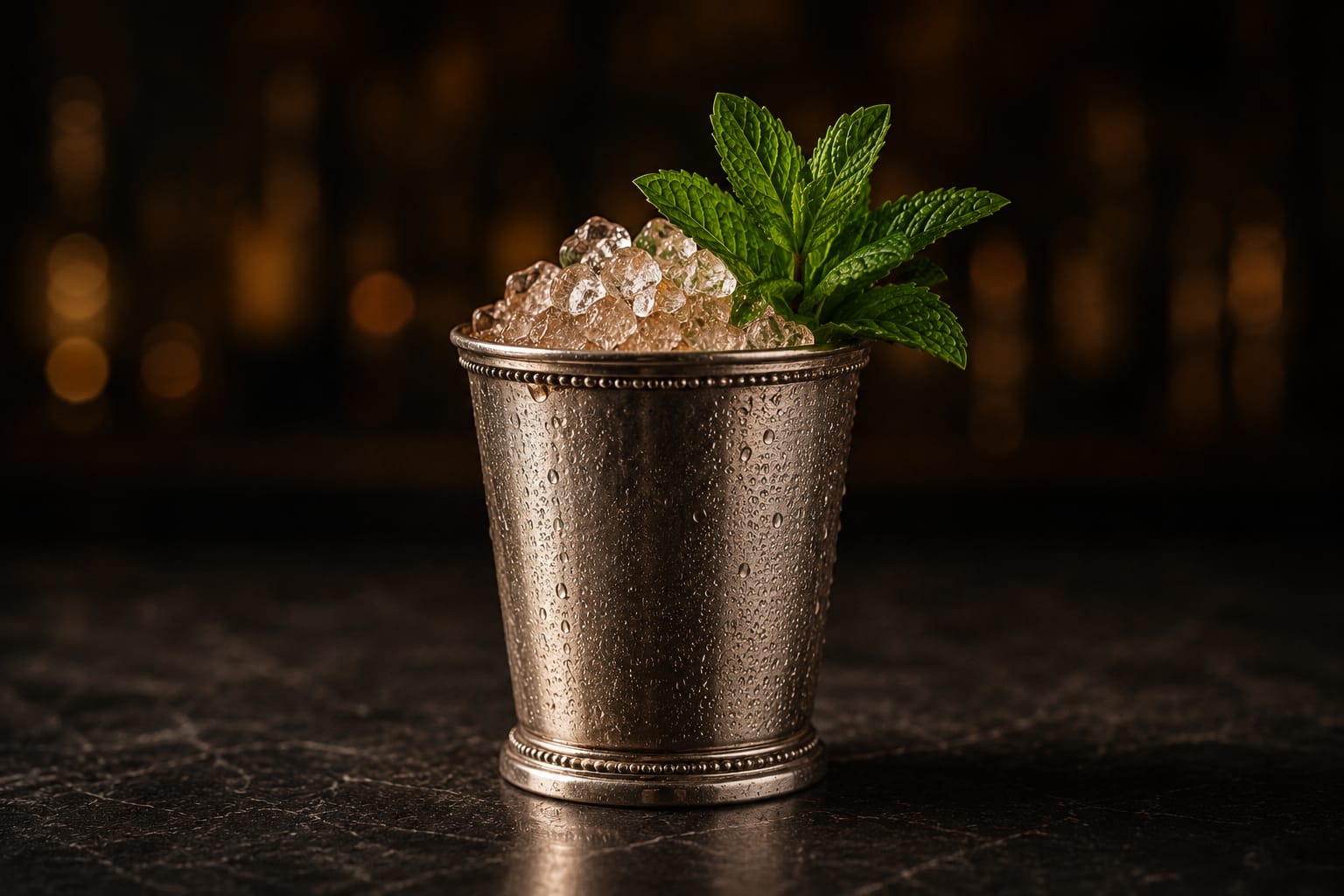
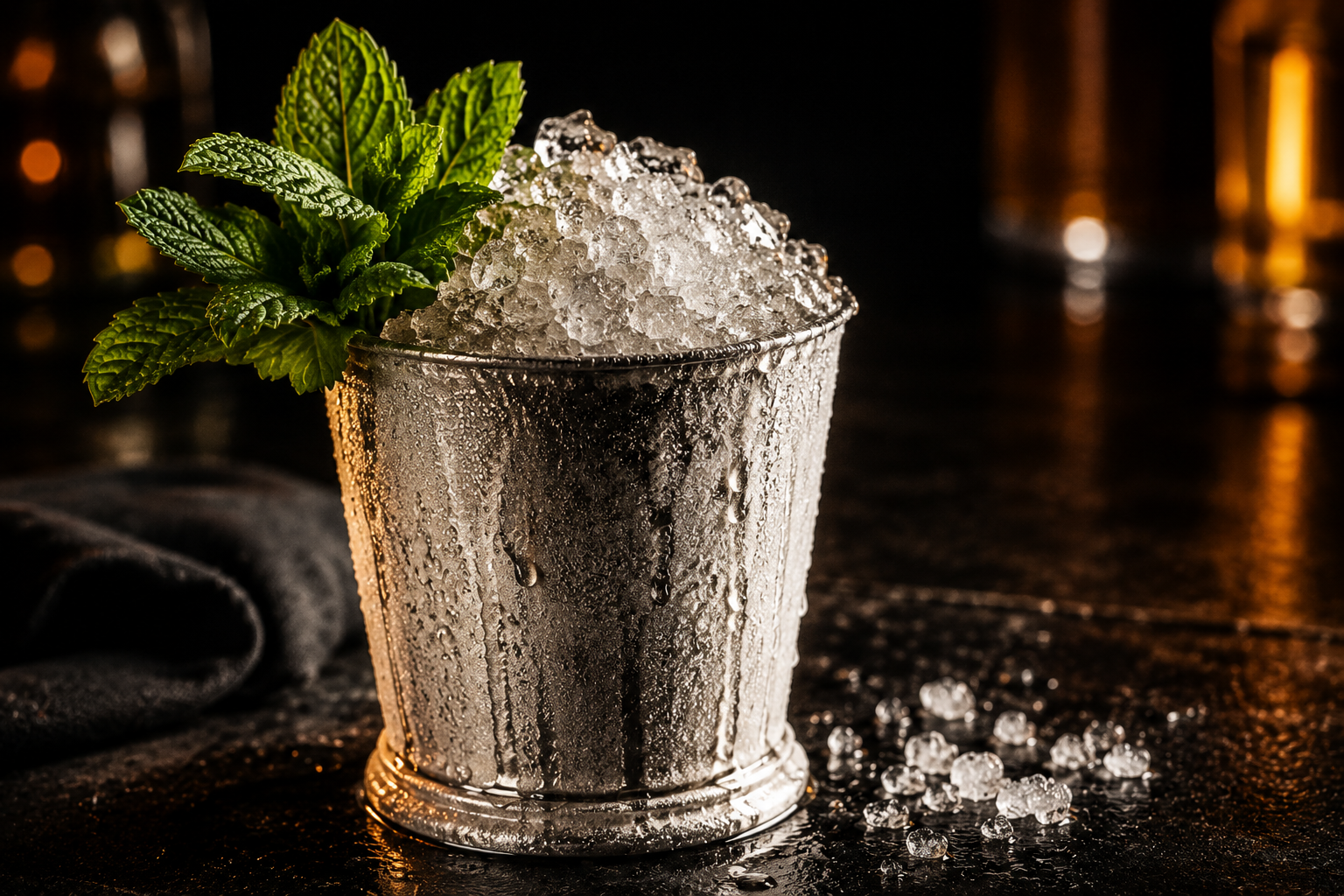
Now the opposite instinct entirely. Crushed and pebble ice is surface area taken to its limit — a drink packed with it goes intensely cold and dilutes quickly, and that is the whole idea. It is everything the big cube is built to prevent, which is exactly the point: these are drinks that want the water and are better for the cold.
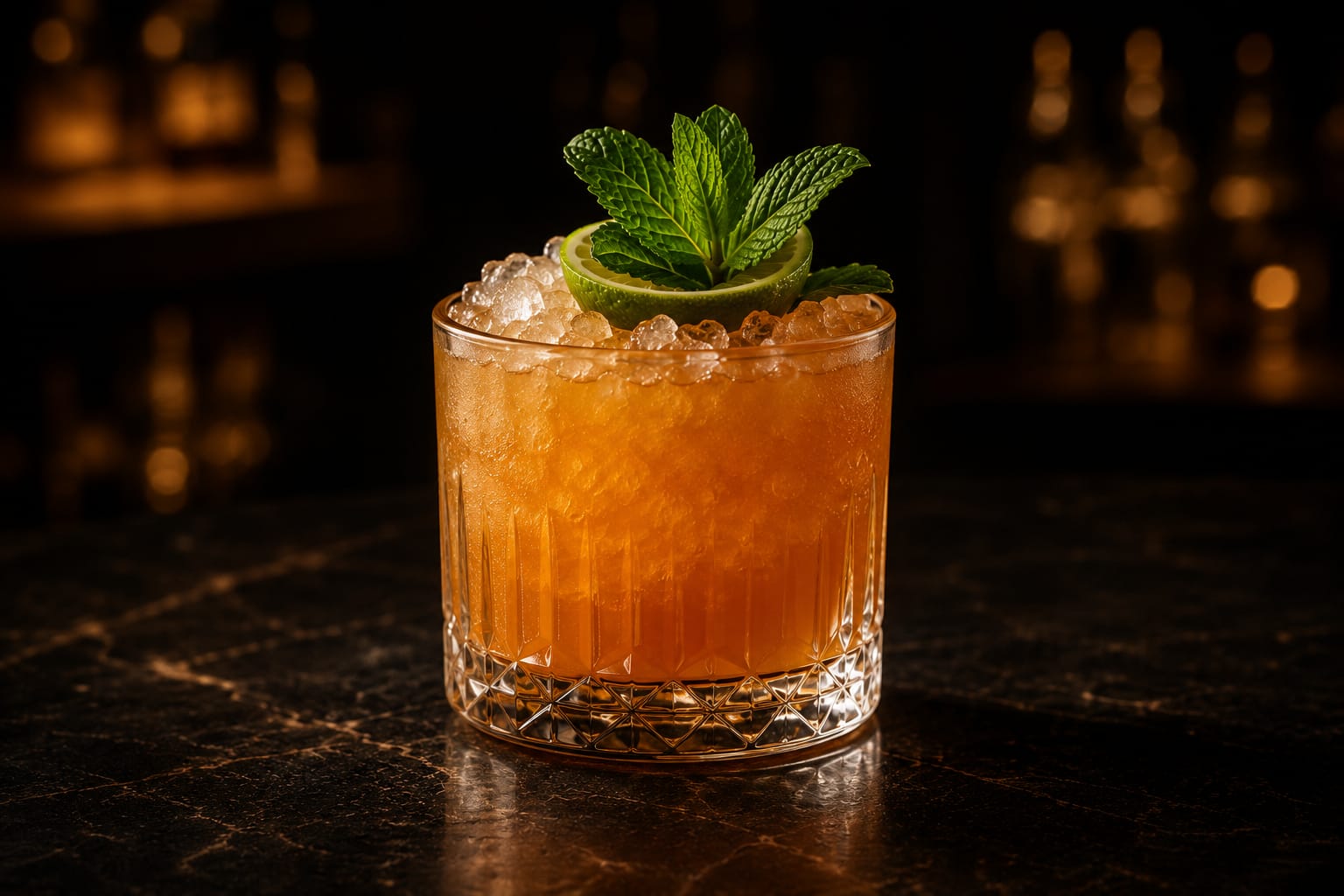
The Mint Julep is the purest statement of it — bourbon and sugar and mint heaped over crushed ice, frost climbing the metal cup, the drink growing colder and softer as you go. Tiki works from the same score: a Mai Tai is a strong, rum-forward, barely-sweet drink that leans on crushed ice to open up and stay frigid through a long, unhurried sit. A Mojito uses it to keep a tall, minty cooler bracing to the last sip. And the Sherry Cobbler, one of the classic drinks to make crushed ice its entire personality, is little more than sherry, sugar, and fruit over a mound of it, built to be drunk through a straw as it slowly melts into itself.
Notice what crushed ice offers that cubes can't: texture and a little theatre. The frost creeping up the cup, the half-slushed first sip, the way the drink keeps evolving — none of it is a side effect. It's part of the pleasure, reserved for drinks with the backbone to spend on the water.
No ice at all
Which leaves the strangest category — drinks served with no ice in them at all, and, not coincidentally, among the most precise on any list.
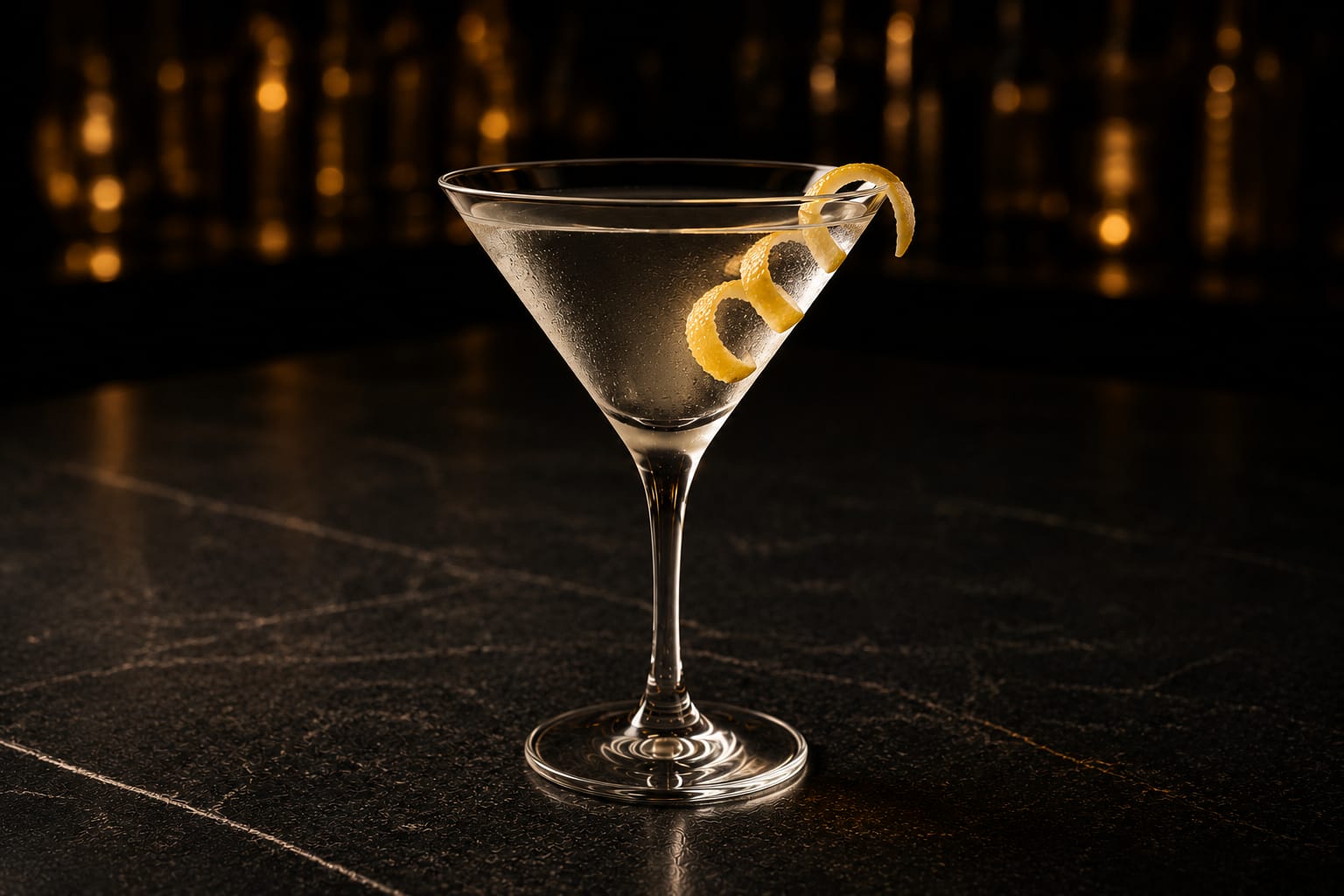
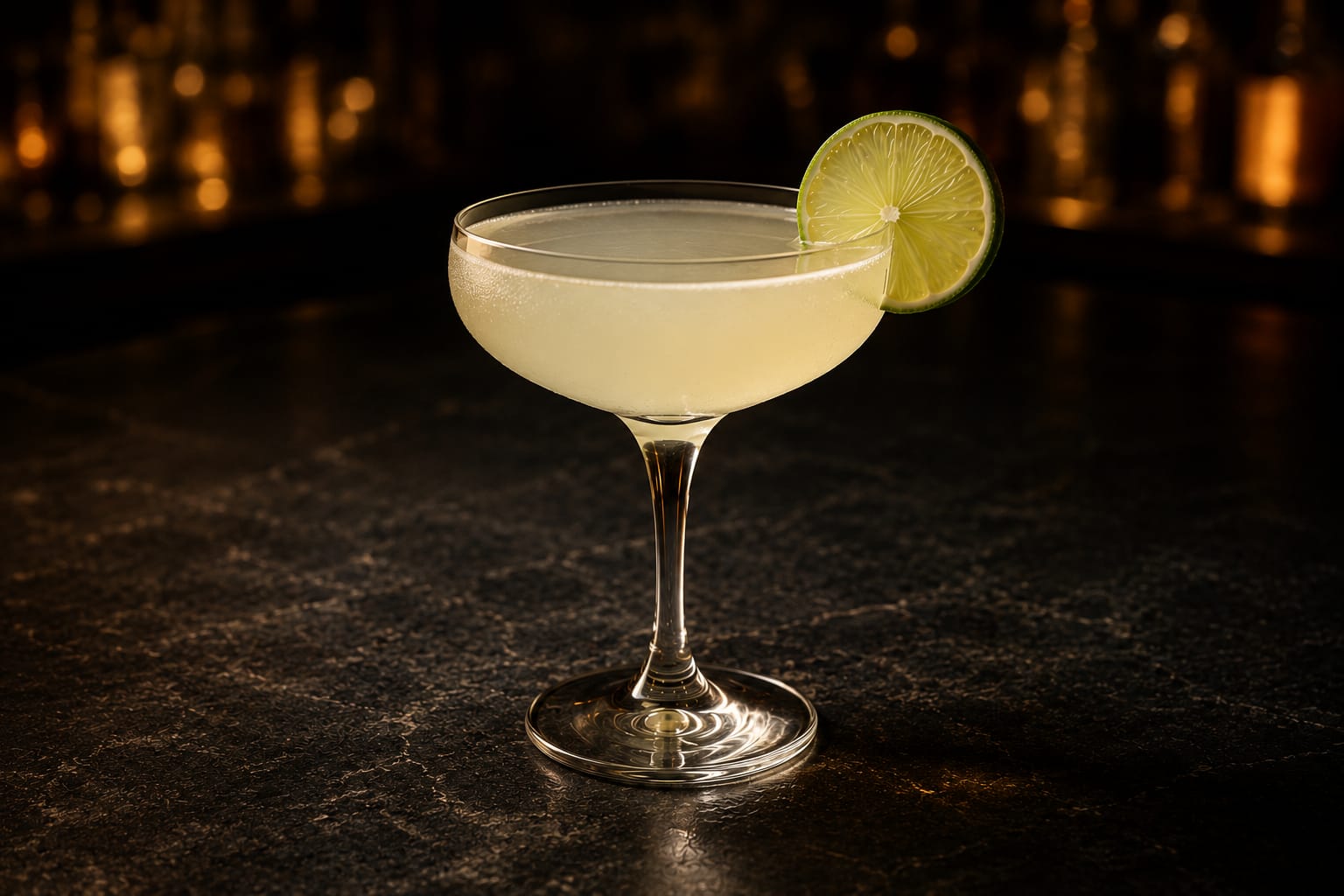
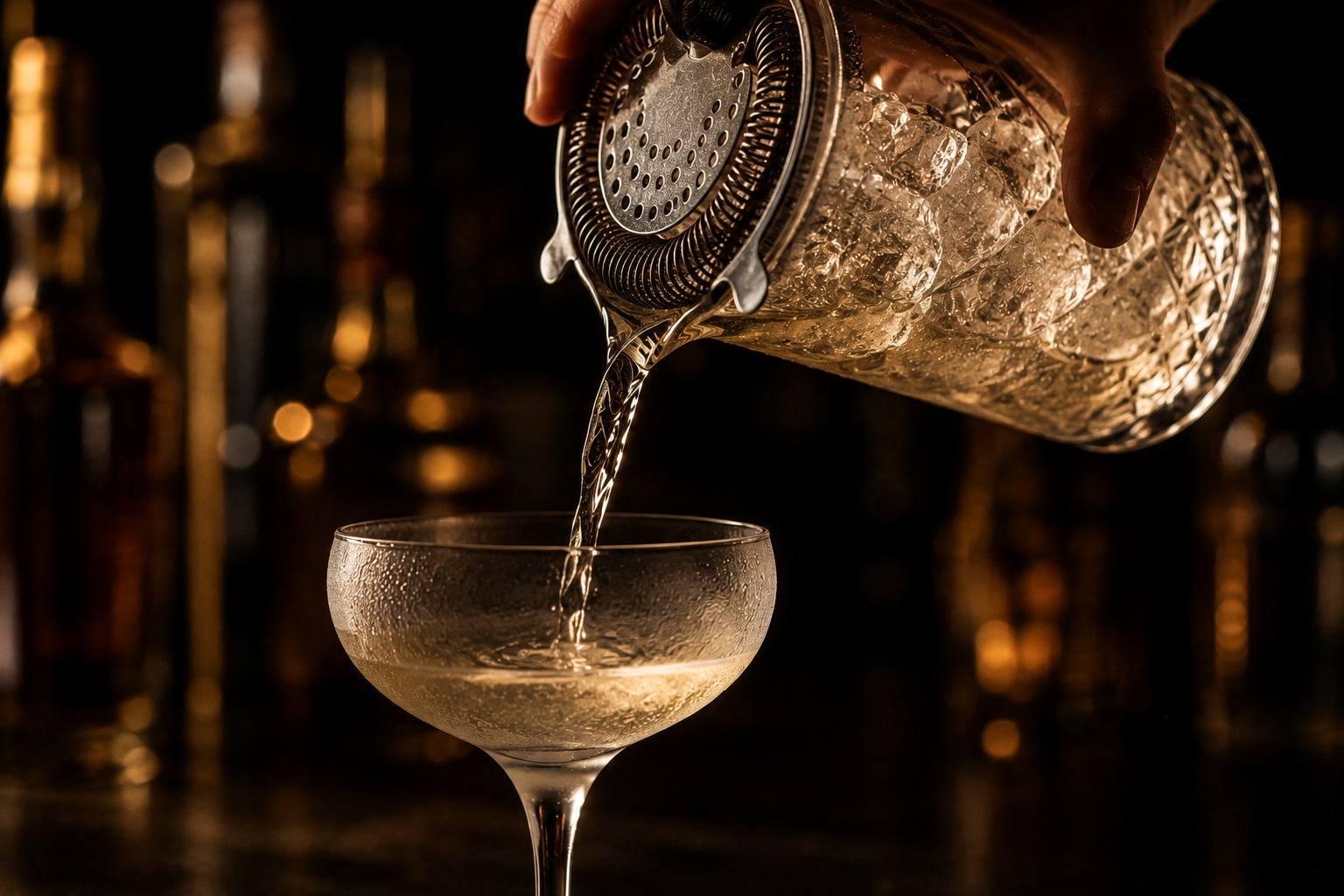
A Martini or a Daiquiri is stirred or shaken hard over ice and then strained clean away from it, into a chilled glass, to be drunk "up." It's tempting to read "no ice" as "less cold," but it is the reverse. The chilling and the dilution have both already happened — in the mixing glass, in the shaker — and they happened under the bartender's hand, stopped the moment the drink was cold enough and watered enough. Straining the drink off the ice isn't withholding the cold; it's sealing it in, and refusing to let the drink grow any colder or any wetter than intended. A Sazerac makes the whole logic visible: the glass is chilled with ice that's then thrown out, the drink is stirred with ice and strained into that waiting glass, and not a single cube arrives at the table. The ice did everything, and then it left.
This is the clearest proof that ice is a tool, not a garnish. An "up" drink is simply a drink where the tool has finished its work and been set down.
Getting ice right at home
Once you know what ice is for, a few habits become obvious — the ones that separate a home drink from a bar one.
Use more ice, not less. It runs against instinct, but a full glass is colder and less diluted than a sparse one — a big cold mass chills by melting a little, a few cubes by melting a lot. Fill it.
Never serve a drink over the ice you built it with. The ice in your shaker has already done its job — half-melted, rounded off, and busy diluting. Strain the finished drink onto fresh ice, or into a chilled glass, and start the clock over.
Chill the glass. A warm glass steals cold from the drink and makes the ice work harder to make up the difference — more melt, more water. A few minutes in the freezer, or a fill of ice water while you build, costs nothing.
Don't be afraid of dilution. The most common fault in a home-stirred drink isn't too much water — it's too little. A Martini or a Manhattan pulled off the ice after a lazy stir can arrive hot and harsh, tasting of raw spirit. Stir longer than feels necessary; the water is an ingredient, and you're adding it.
Clear ice is mostly for looking at. A single flawless clear cube is a genuinely beautiful thing. Just keep the practical case in proportion: a dense, fracture-free block has a little less hidden surface area than a cloudy, cracked one, and holds up marginally better — but clarity itself isn't what keeps a drink from watering down. Size and quantity do that. A big cloudy cube still beats a fistful of clear shards, every time.
When the recipe doesn't say
Most recipes name a build — "over one large cube," "in a highball with ice," "shaken and strained." Some don't, and once you understand what ice is doing you never have to guess.
Ask what the drink wants from ice's two jobs. A spirit-forward drink you mean to sip — anything stirred, brown, and boozy — wants a single big cube: the cold held steady, the water kept to a minimum. A long, mixed, refreshing drink wants a glass filled with cubes, the melt working hand in hand with the mixer. A strong or tropical drink you want frigid and slushy wants crushed ice, frost and all. And a delicate, aromatic drink meant to be served up wants to be made cold over ice, then parted from it, arriving exactly as intended and getting no colder.
The rule underneath is the one the first taste taught. Decide how cold the drink should be, and how much water it should carry — then choose the ice, the shape and the amount, that delivers precisely that and nothing more. Get it right and the ice stops being a question. It stops being the cold thing you add at the end and becomes what it was all along: the ingredient doing the most work in the glass.