The Cocktail Garnish Guide
Why the right garnish changes how a drink smells, tastes, and reads — and how to reason your way to one for anything you pour.
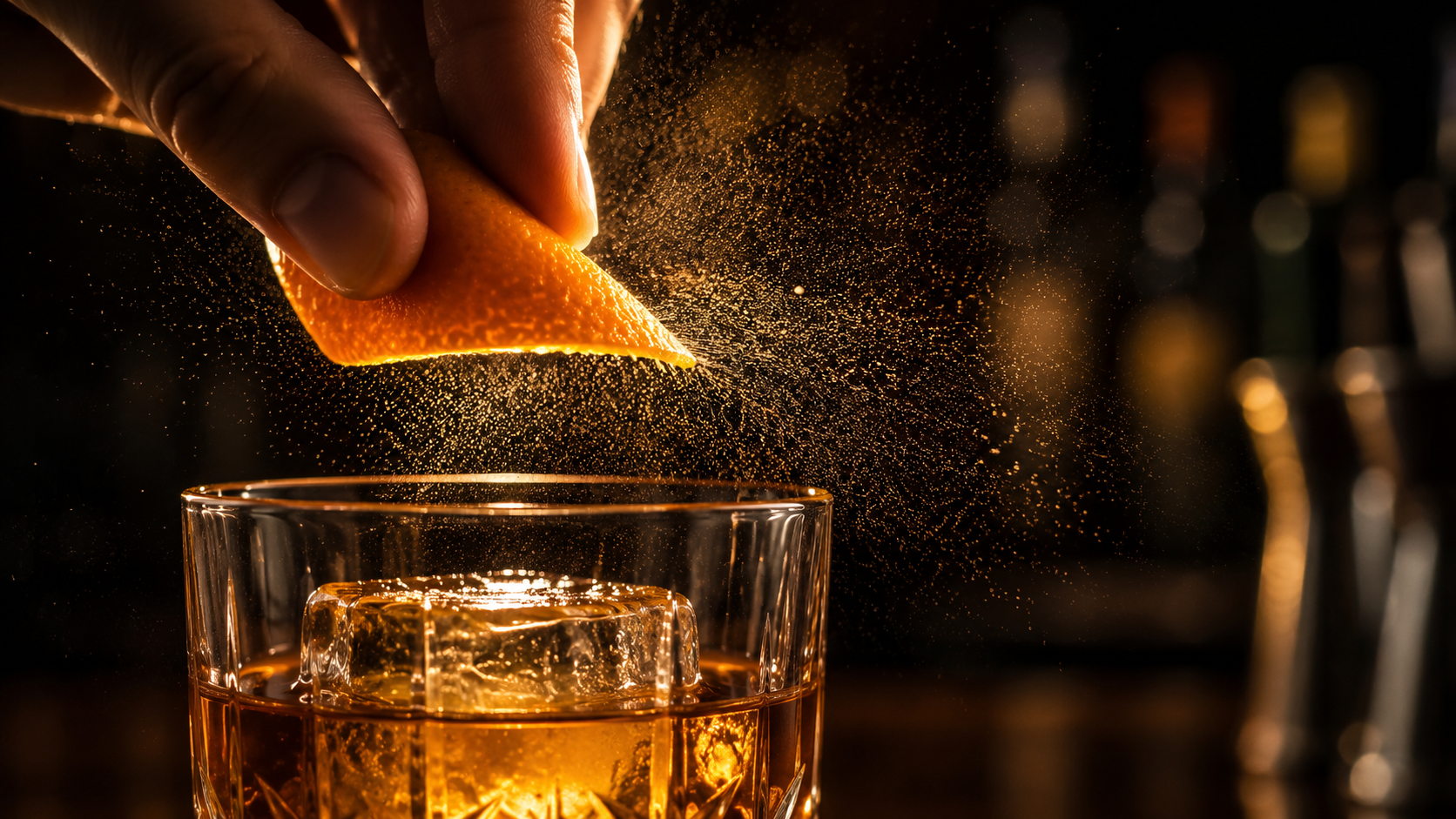
Cut a wide strip of peel from an orange and drop it into an Old Fashioned. It looks right. It does almost nothing. Now take the same piece of peel, hold it skin-side down an inch above the glass, and give it a firm pinch. A fine spray of oil catches the light and settles across the surface, and before the drink is anywhere near your mouth you can already smell it — bright, sharp, unmistakably orange. Nothing in the glass changed. The garnish did.
That small difference is the whole idea, and it's the part of a cocktail home bartenders most often treat as an afterthought. A garnish isn't decoration. It's the last instruction a drink gives before you taste it — and it is aimed, every time, at one of your senses. Learn to read which sense it's speaking to, and you stop decorating drinks and start finishing them.
What a garnish is actually for
Before the examples, the reasons. A garnish tends to do one of four things — and the best ones quietly do more than one at once, which is exactly why they feel inevitable rather than stuck on.
It carries aroma. Much of what we call flavor is really smell, and a garnish is the easiest way to put a scent right under the nose at the moment you drink. An expressed citrus peel, a slapped sprig of mint, a dusting of grated nutmeg — none of these change what's in the glass, but all of them change what reaches you first.
It adds flavor. Some garnishes are edible instructions. A salted rim seasons every sip before the liquid arrives; a wedge of lime is a squeeze of acidity the drinker controls; a few drops of bitters sharpen a drink at the lip.
It signals what the drink is. A garnish is a label your senses read before your brain catches up. A salt rim, a celery stalk, a bouquet of mint — each one announces a whole category of drink from across a room.
It shapes the experience. This is the quietest role and the one to be honest about: most garnishes don't change texture or temperature. A handful do — a sugar rim adds a faint crunch, a frozen sprig keeps a cold drink smelling cold — but more often this fourth job is simply presentation, and presentation is the first taste whether we admit it or not.
Most garnishes lean on one of these roles and borrow from the others. The question worth carrying through the rest of this piece is the simplest one: which of these is this garnish for?
The garnish you smell
Start with aroma, because it's the role that does the most work and gets the least thought. Smell does far more work in the experience of flavor than most people realize, and a garnish placed where you can smell it colors the entire drink before the first sip.
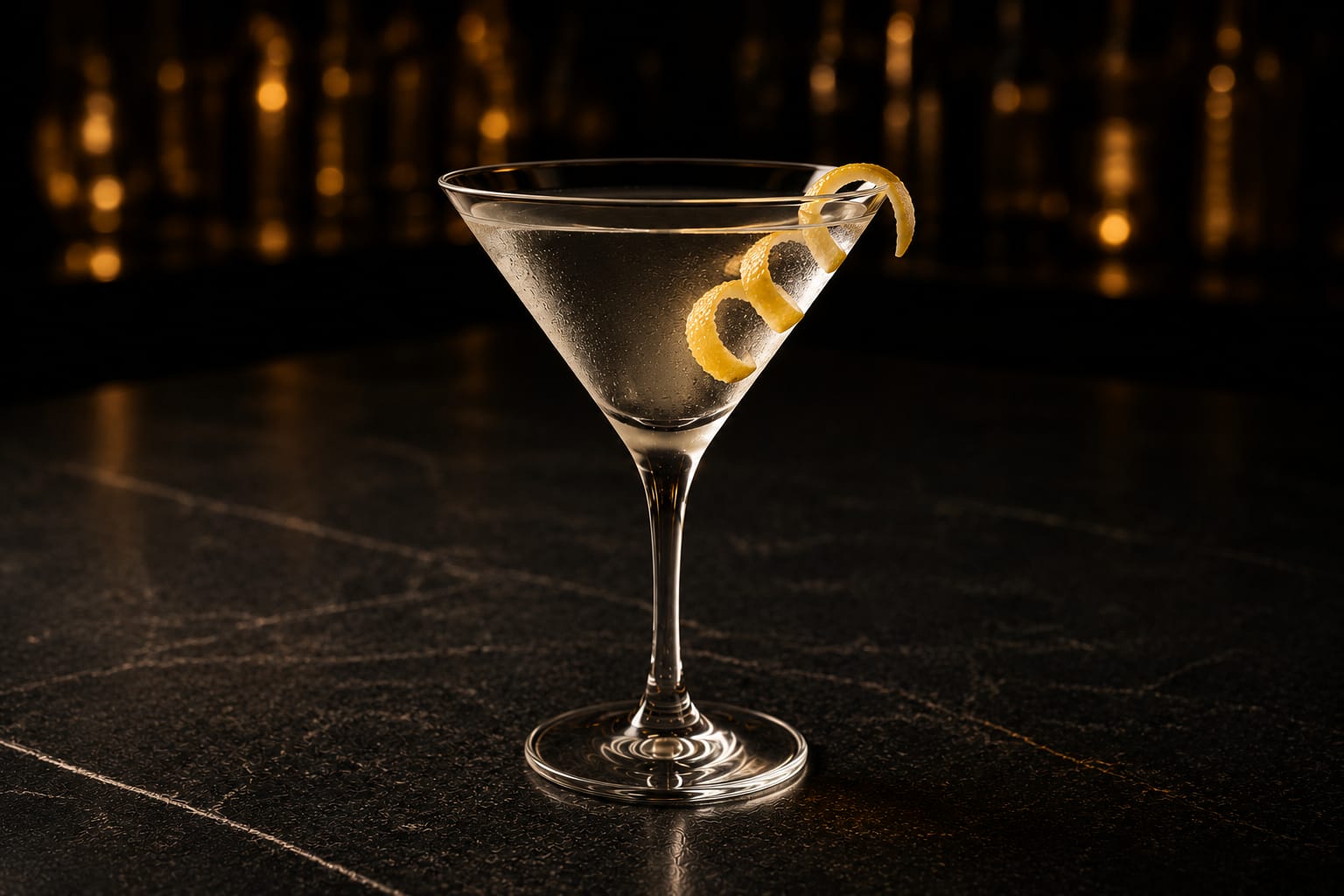
Citrus peel is the clearest lever you have. The skin of a lemon or an orange is full of aromatic oil, and "expressing" a twist — pinching or twisting it over the surface — sprays that oil across the top of the drink and into the air you're about to breathe. This is where a real distinction lives, one worth internalizing: a twist is primarily an aromatic act, while a wheel is mostly there to be seen and a wedge gives the drinker something to squeeze. Same fruit, different jobs. Reach for the wrong one and you've answered the wrong question.
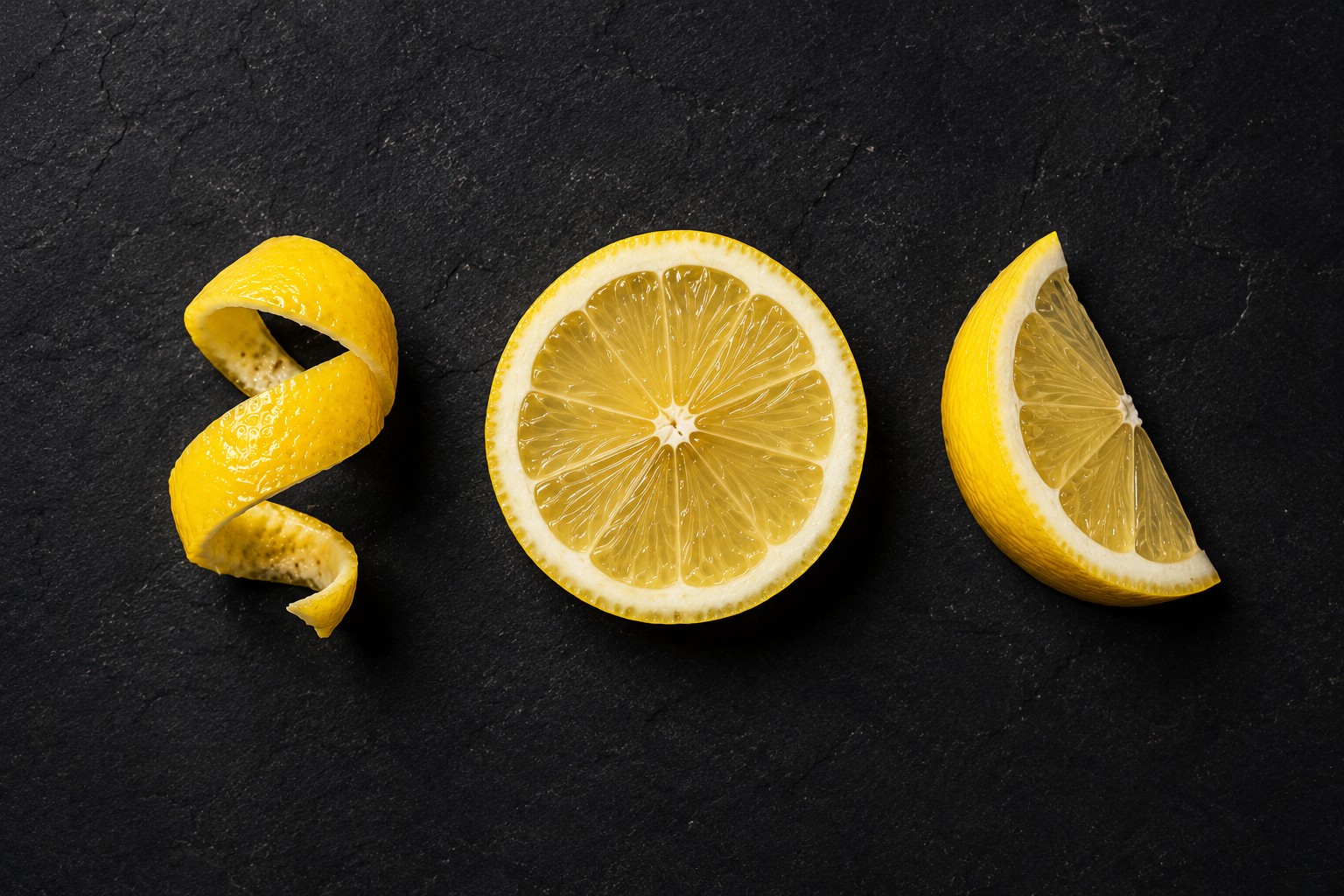
You can see the principle repeat across the classics. A Negroni takes an orange peel because its bitter-sweet weight wants a lift of citrus oil over the top; a Martini or a Sazerac takes lemon for the same reason, a sharp aromatic note set against a spirit-forward base. In the Sazerac the peel is traditionally expressed and then, in many bars, discarded entirely — proof that the point was never the object in the glass but the scent it left behind.
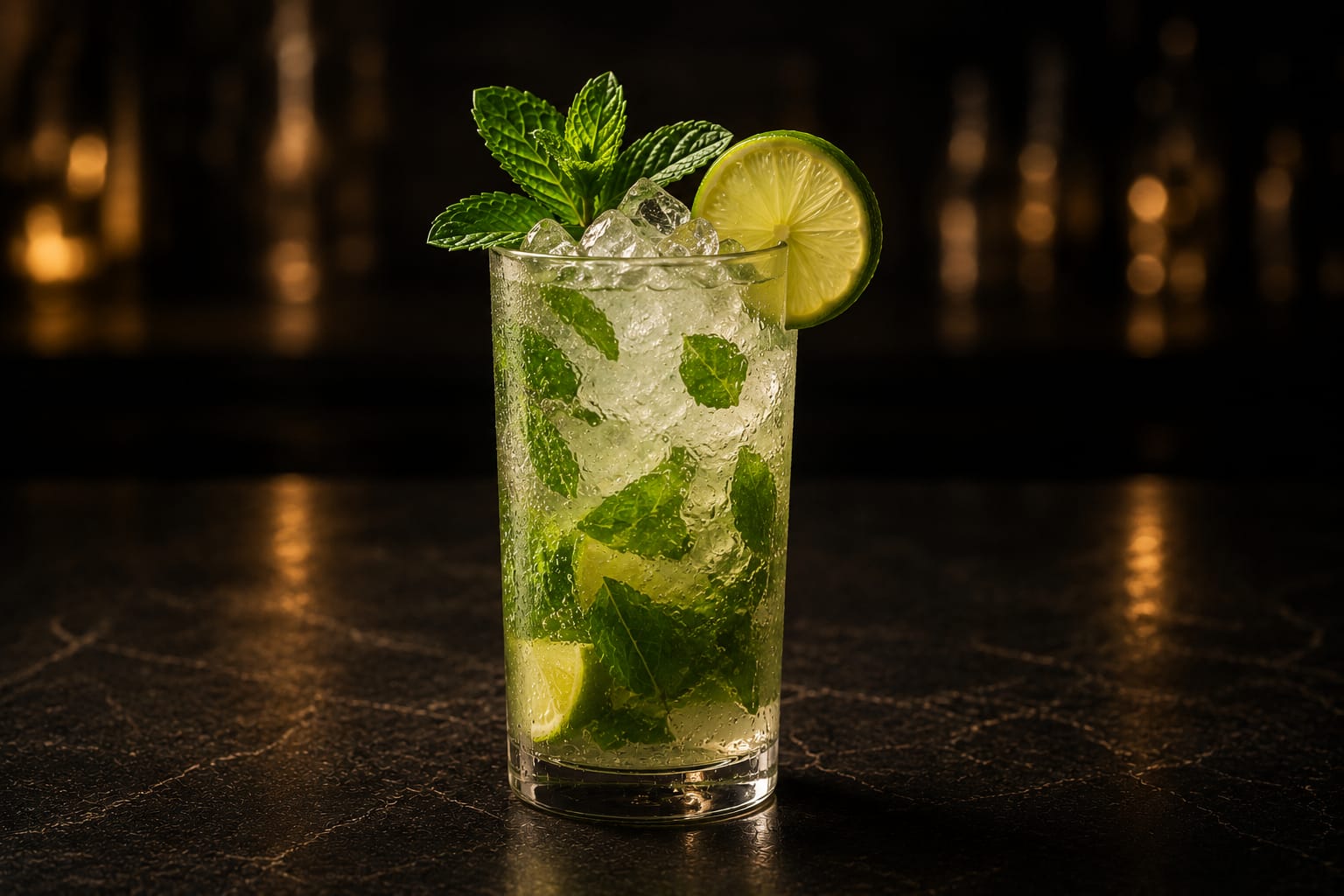
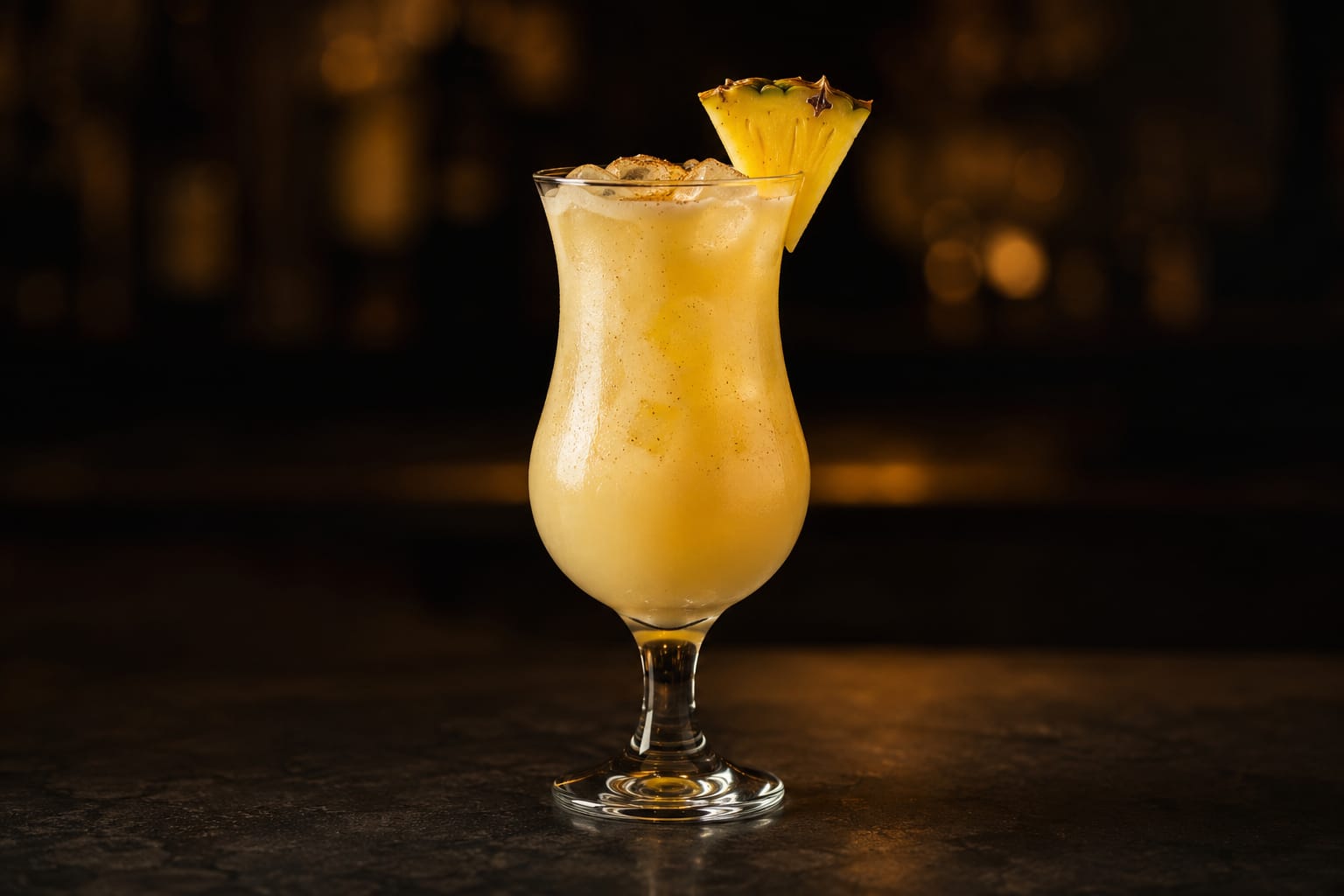
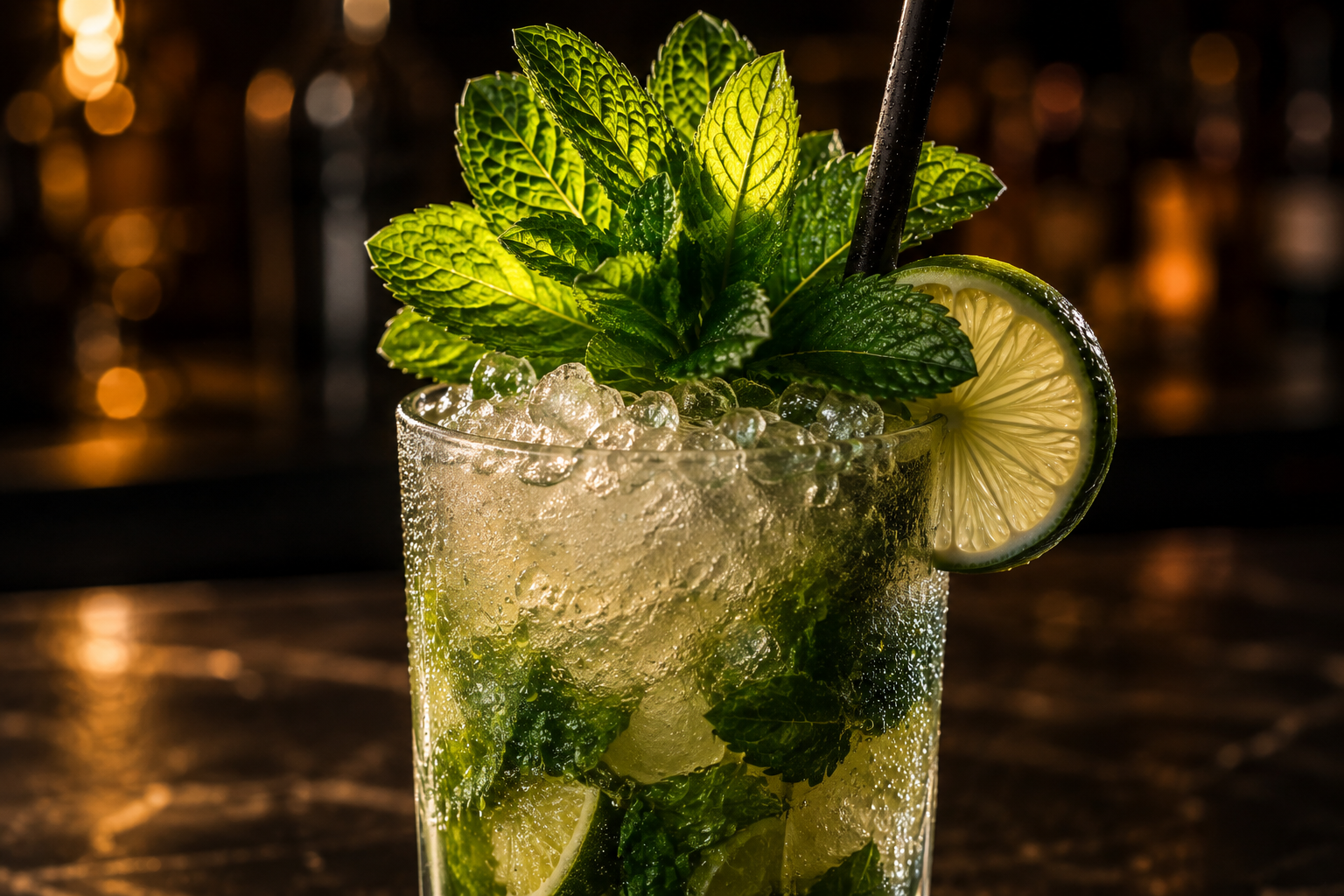
Aroma isn't a citrus story, though, and this is where the idea broadens. Mint is an aromatic garnish that has nothing to do with peel: the sprig crowning a Mojito or a Mint Julep is placed high, right where your nose goes, so every sip arrives through a cloud of mint. A Mai Tai does the same — the mint there is aromatic, not ornamental. Grated nutmeg works on the same logic in a different register, a warm dusting of spice over the top of a creamy drink like a Painkiller, met by the nose long before the tongue. Different ingredients, one purpose: put the smell where the drinking happens.
The garnish you taste
Some garnishes are meant to be tasted directly, and they change a drink in a way aroma never can.
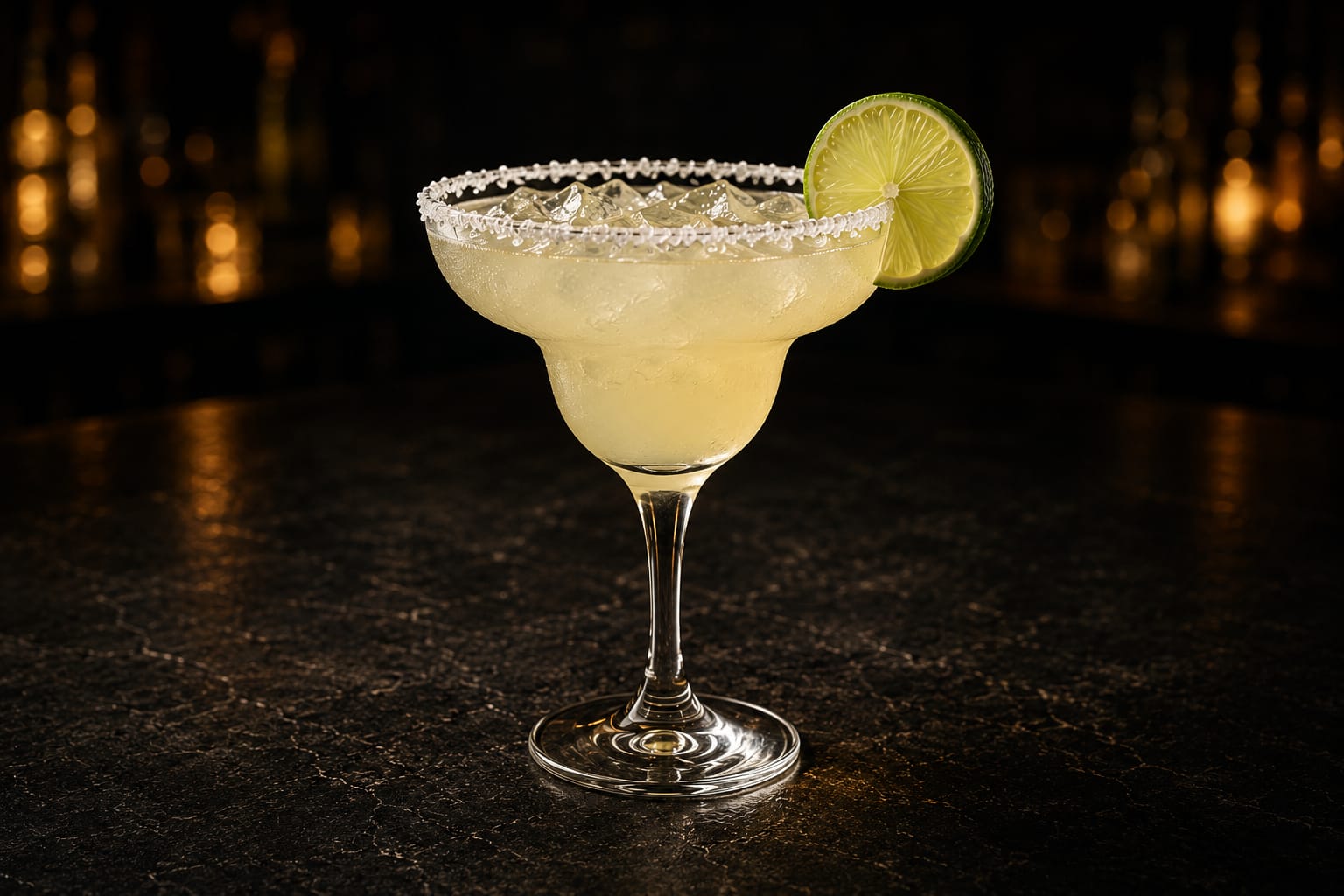
The rim is the clearest case. A ring of salt around a Margarita seasons the drink at the exact moment it reaches your lips — and salt has a quiet way of rounding off bitterness and lifting the fruit, so the same drink reads a little sweeter and a little softer for it. Sugar does the opposite favor, framing a bright, sour drink like a Sidecar with a sweet edge that meets the tartness head-on. In both cases the garnish is a flavor you taste before the liquid, and it recalibrates everything that follows.
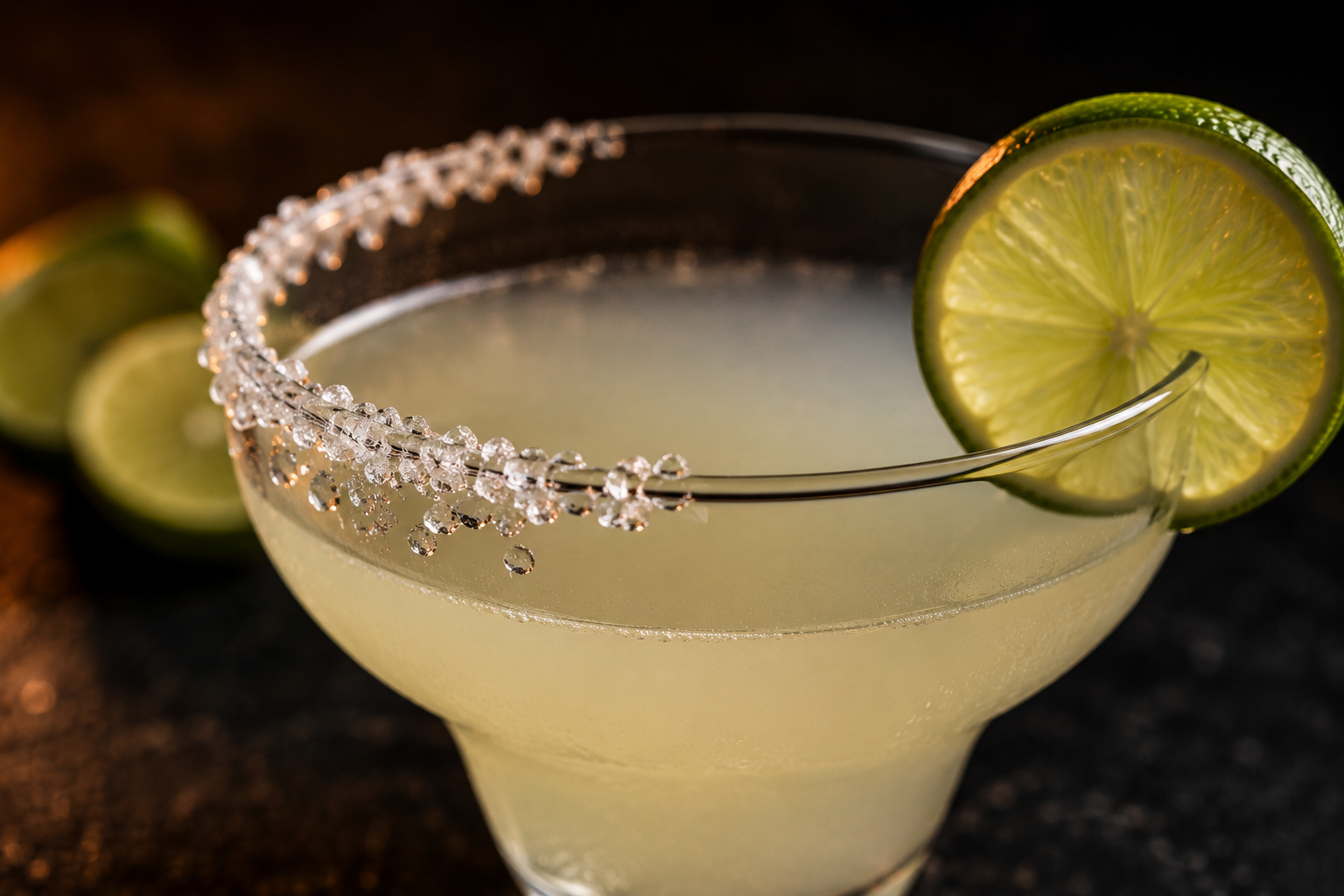
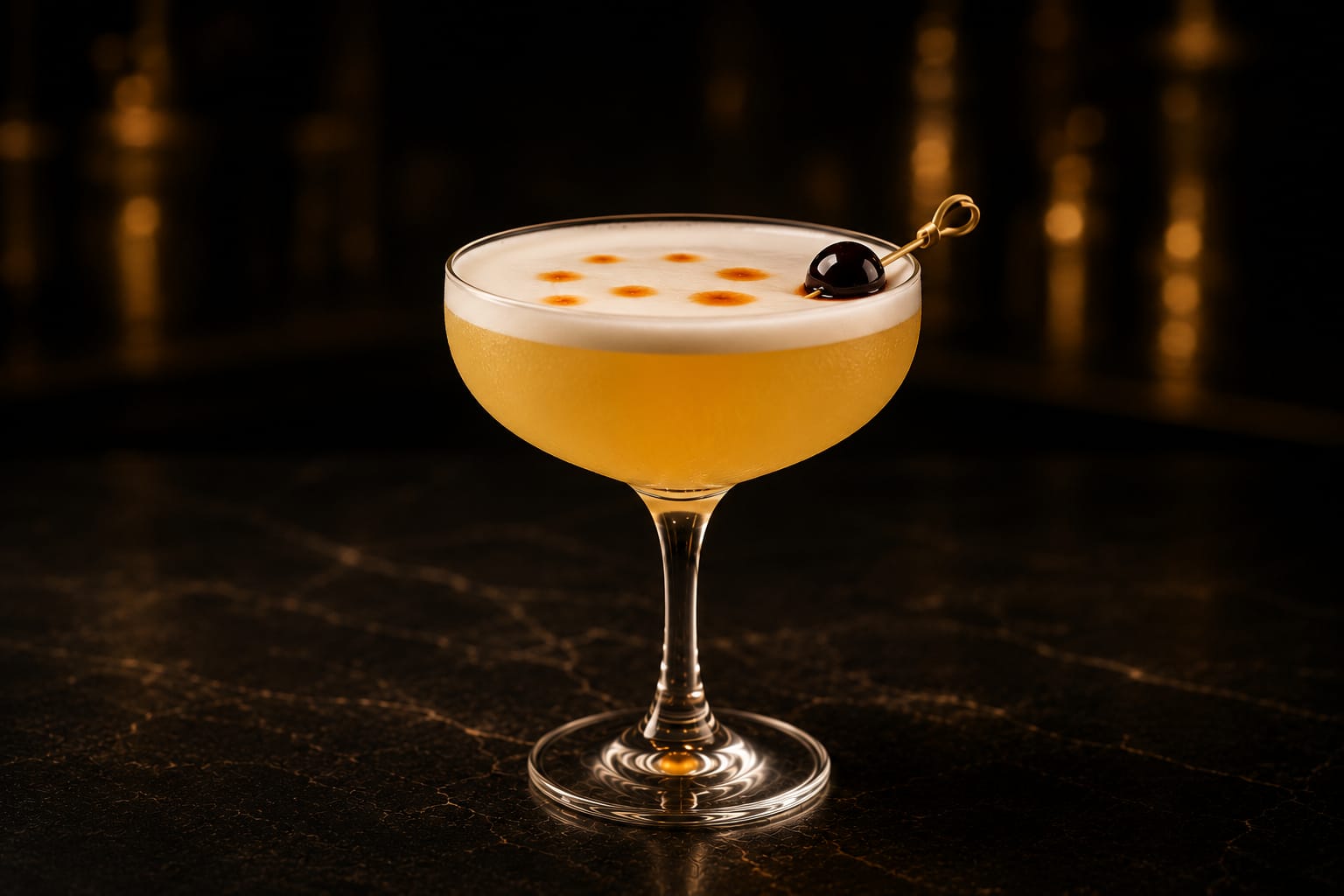
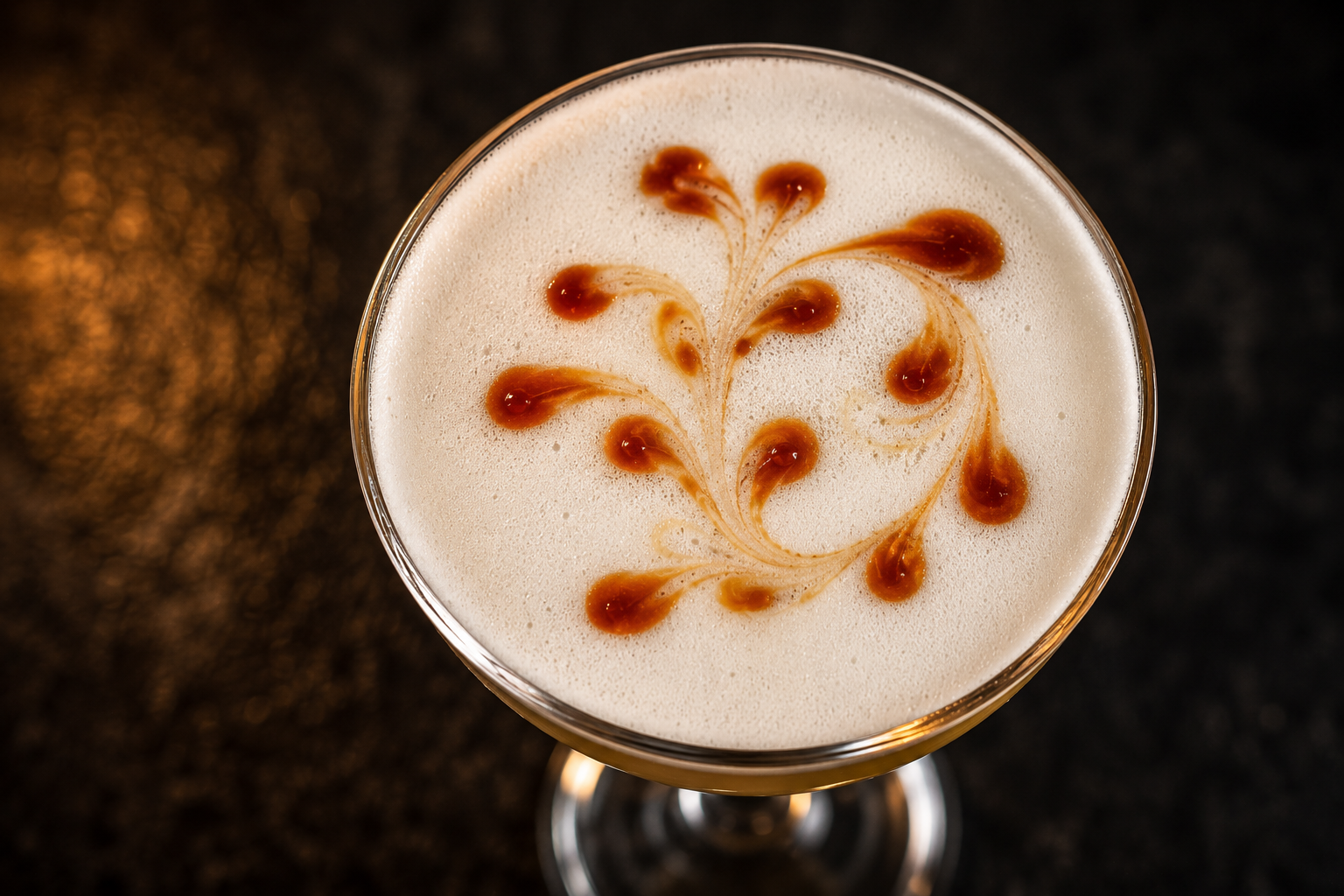
A wedge of citrus is a subtler kind of edible garnish: it hands the drinker control. Squeeze the lime into a highball or leave it perched on the rim, and you've adjusted the acidity to taste — an instruction the recipe delegates to the person holding the glass. And then there's the small art of bitters on foam. The few dashes of Angostura drawn across the egg-white cap of a Whiskey Sour are working two senses at once: an aromatic hit as you raise the glass, and a faint bitter accent right on the lips. It's the rare garnish that's genuinely doing the aroma job and the flavor job in the same gesture.
The garnish that tells you what the drink is
There's a third thing a garnish can do that's easy to miss: it can tell you — and the person you handed the drink to — exactly what the drink is. And in at least one case, it can decide.
Take the familiar Martini template — gin and dry vermouth, stirred cold and served up. Finish it with a lemon twist and you have a Martini. Give that same basic drink a cocktail onion instead, and you're in Gibson territory — a drink with its own name, its own savory, briny character, its own reputation. Same template, a different finish, and the garnish is what tells the two apart. That's the strongest version of the argument: the finishing element isn't always sitting on top of a cocktail's identity — sometimes it is the identity.
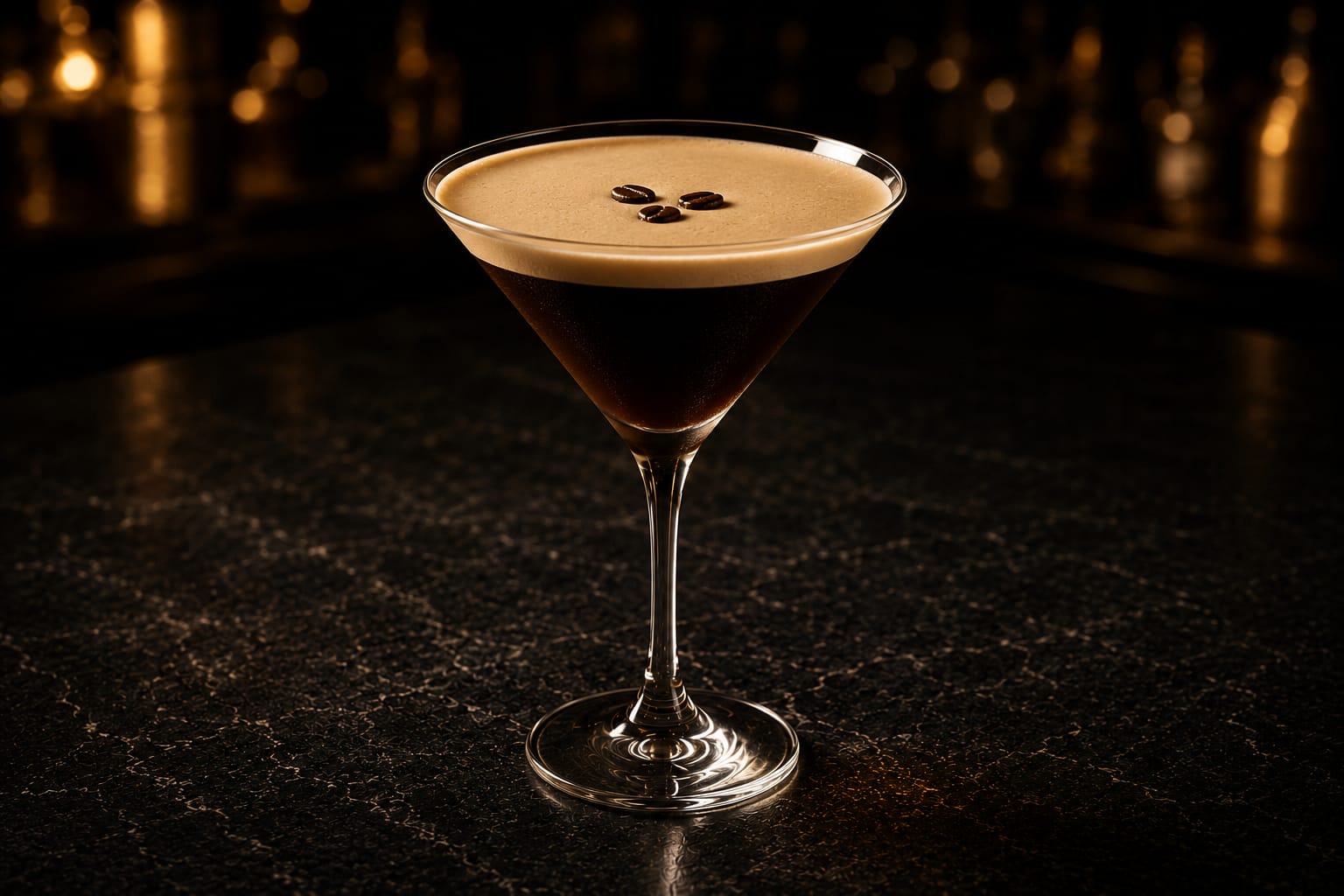
Most garnishes signal less dramatically but no less usefully. A salt rim reads "margarita" before you've tasted a thing. A celery stalk means Bloody Mary. A tuft of mint over crushed ice means a julep or a Mojito is coming. The three coffee beans afloat on an Espresso Martini are a signature so recognizable the drink looks unfinished without them. A good garnish is a label your senses read first, and reading it correctly is half of knowing what you're about to drink.
Technique: the line between a garnish and a mess
Understanding what a garnish is for makes the handling obvious, and the handling is where most home drinks fall short.
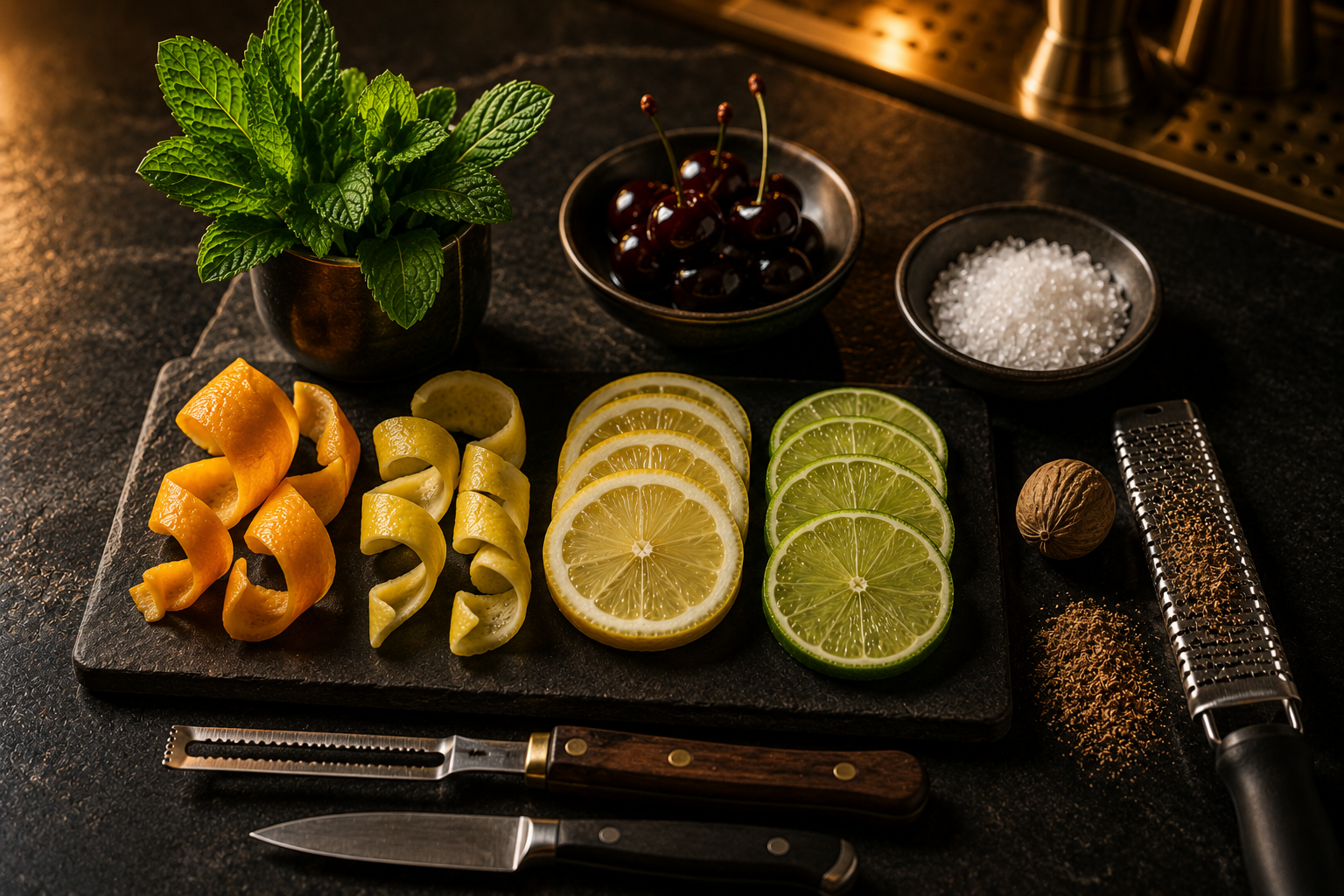
Express, don't just drop. A peel left floating gives you almost nothing; a peel pinched over the surface gives you the whole point. If the garnish is a citrus twist, the pinch is not optional — it's the entire job.
Put aromatics where the nose is. Mint buried at the bottom of a glass is wasted. Slap the sprig once between your palms to wake it up and set it at the rim, next to the straw, so it meets you on the way in.
Rim half the glass, not the whole thing. A salt or sugar rim all the way around commits every sip to it. Rimming one side lets the drinker choose seasoned sips or clean ones — a small courtesy that also keeps a heavy rim from overwhelming the drink.
Fresh does the work. A tired sprig, a dried-out peel, a cherry from a dusty jar — none of them carry aroma or look like anything. A garnish is only an instruction if it still has something to say.
Keep it in proportion. The garnish should finish the drink, not fence it off. If the person has to dismantle a fruit sculpture to take a sip, the garnish has stopped serving the drink and started competing with it.
When to leave it off
Knowing when not to garnish is part of knowing how, and the catalog is full of drinks that make the case.
A few classics wear nothing at all, and they're better for it. A Ramos Gin Fizz is built around a tall, pillowy head of foam that is the entire spectacle — drop a cherry or a wheel on it and you've collapsed the thing you worked to build. A Paper Plane is four ingredients in equal measure, in balance, complete; there's nothing a garnish could add that the drink hasn't already said. Some drinks are a color, or a clean line, or a texture, and the most respectful finish is to leave them alone.
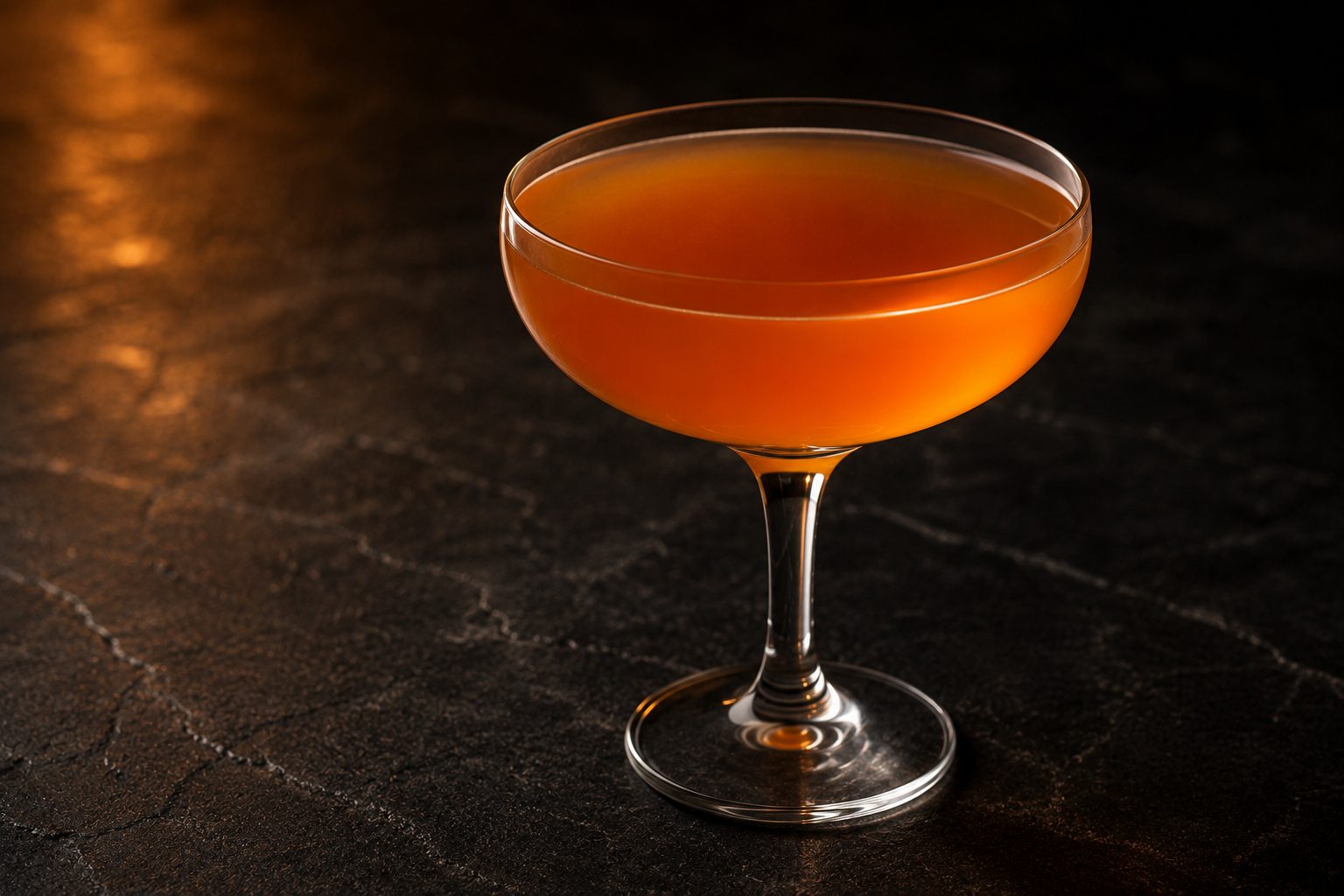
The instinct to make a drink "look finished" is exactly the instinct to distrust here. A garnish added out of habit — because the glass looked bare, because a naked drink felt unfinished — is decoration in the truest, emptiest sense: a garnish with no sense to speak to. When you can't name which job the garnish is doing, the answer is usually to skip it.
When the recipe doesn't say
Plenty of recipes name a garnish. Plenty don't, or leave it to you. Once you know what a garnish is for, you can reason your way to a good one every time.
Start by naming the drink's dominant character, then match the garnish to it. A spirit-forward, aromatic drink wants a peel expressed over the top — orange for something warm and rich, lemon for something bright and dry. A cooler built on an herb or crushed ice wants that herb slapped and set at the nose. A shaken sour with a foam cap can take a few drops of bitters, working scent and taste together. A drink whose whole identity is its surface, its color, or its balance wants nothing, and the discipline to give it nothing.
The rule underneath all of it is short: figure out which sense the drink is asking you to reach, choose a garnish that reaches it, put it where that sense will find it, and then stop. Get that right and the garnish disappears as a decision and reappears as part of the drink — the last instruction, and the easiest one to get right.